Yoyogi Park: Olympic History, Park Rules, and When to Go
How Yoyogi Park went from army parade ground to Olympic Village, what you can and cannot do there, and how to time a visit for blossoms or events.
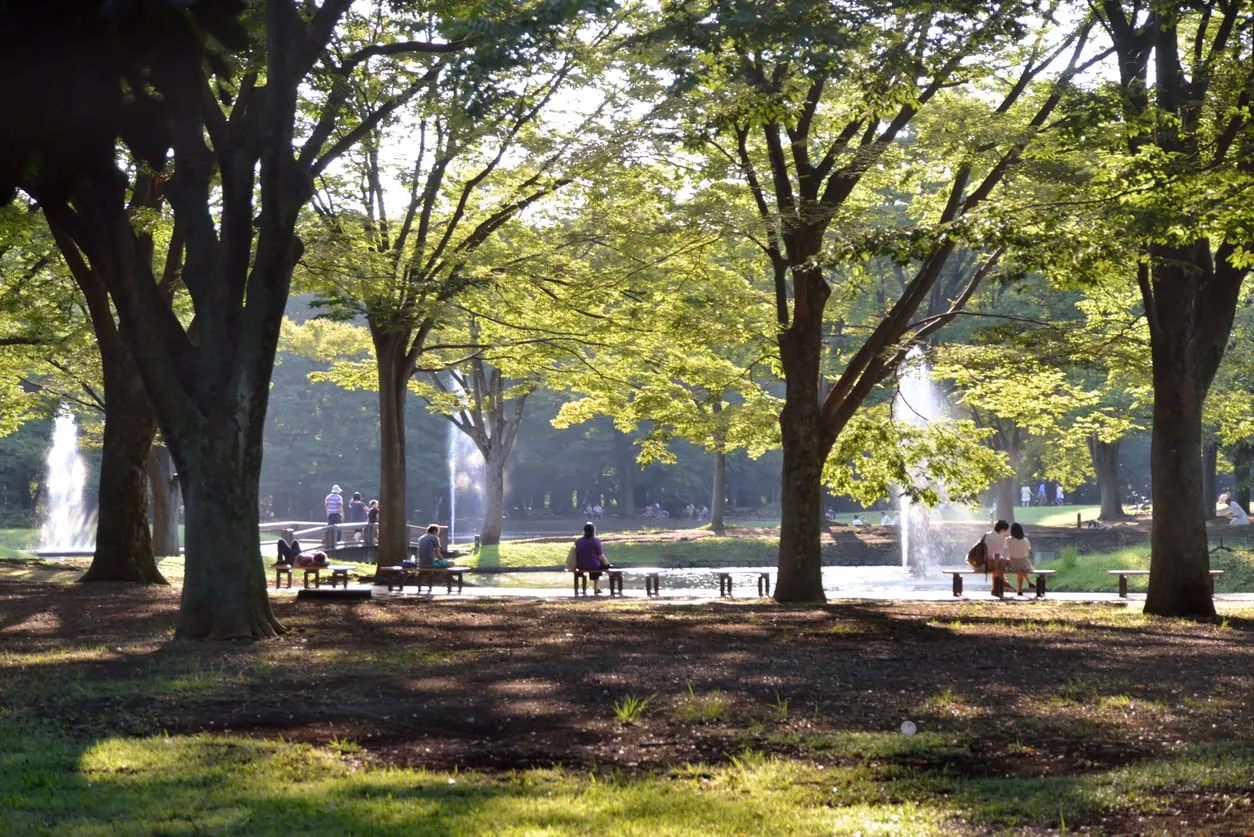
On Dec 19, 1910, two army captains, Tokugawa Yoshitoshi and Hino Kumazo, flew airplanes from the army’s parade ground at Yoyogi, the first powered flights by Japanese pilots in Japan. That ground is now Yoyogi Park, and its rules forbid flying so much as a toy drone. In between, it was an American housing estate and an Olympic village.
Yoyogi Park (Yoyogi Koen) is a free public park in Tokyo’s Shibuya City, beside the forest of Meiji Jingu. It never closes: the Tokyo Metropolitan Park Association, which manages it, lists it as open around the clock. It covers about 54 hectares (135 acres), roughly a sixth the size of New York’s 843-acre Central Park, and Harajuku Station on the JR Yamanote Line is three minutes away on foot.
At a glance
| Where | Shibuya City: Yoyogi Kamizonocho (Section A) and Jinnan 1-chome and 2-chome (Section B). 3 minutes on foot from JR Harajuku, Yoyogi-koen (Chiyoda Line, C02) and Meiji-jingumae “Harajuku” (Chiyoda and Fukutoshin lines, C03 and F15); 6 minutes from Yoyogi-Hachiman (Odakyu Line) |
| Hours | Always open. The service center and park facilities close over the New Year holidays |
| Cost | Free; some facilities charge (bike rental from ¥100 an hour) |
| Size and age | 544,711 square meters (as of Apr 1, 2022); opened Oct 20, 1967 |
| Layout | Two sections on either side of a road: Section A is the forest park; Section B has the athletics field and an outdoor stage |
| Don’t miss | The monument to the start of aviation in Japan; the Olympic Memorial House, rebuilt as a café in 2026; Yoyogi National Gymnasium next door |
| Banned | Ball games and sports practice, drones, fires and barbecues, tents and tarps, amplified music |
| Official site | Tokyo Metropolitan Park Association (Japanese) |
Checked Nov 11, 2026, against the Tokyo Metropolitan Park Association’s Yoyogi Park pages and notices, the park’s list of prohibited activities, and the Tokyo Metropolitan Government’s March 2026 announcement.
How did an army parade ground become Yoyogi Park?
Through three earlier lives: the army’s Yoyogi Parade Ground from 1909, a US military housing area called Washington Heights after World War II, and the athletes’ village for the 1964 Tokyo Olympics. The park opened on Oct 20, 1967.
The parade ground opened in 1909, the park association says, and the flights came the next year. According to the National Diet Library, Tokugawa took off first, in a Henri Farman airplane he had bought in France, and flew about 3 kilometers in four minutes, climbing to 70 meters. Hino followed that afternoon in a Hans Grade airplane bought in Germany. He had made test flights on Dec 14 and 16 as well, but because he landed right away, neither was recognized as an official flight, the library notes.
A stone monument marks the start of aviation in Japan, and busts of the two captains stand beside it, according to the park’s official X account.
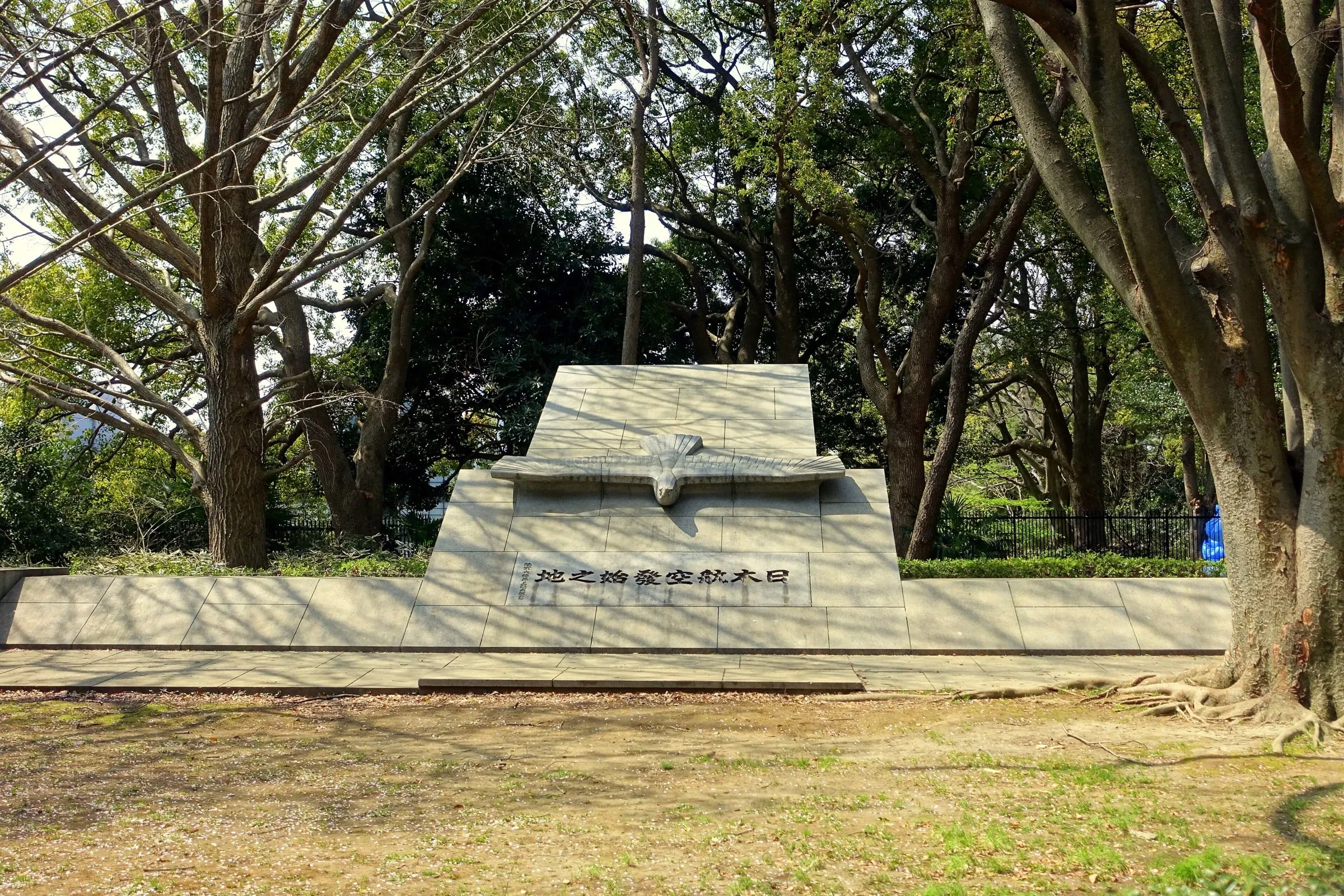
The stone monument marking the start of aviation in Japan, in Yoyogi Park in spring 2018. Photo: Daderot / Wikimedia Commons (CC0). Resized.
After the war, the occupation forces built Washington Heights on the parade ground, according to Shibuya City’s local history museum. Once Tokyo was chosen to host the 1964 Olympics, a campaign began to win the land back for the athletes’ village. It was returned to Japan in December 1963, the museum says.
When the park opened, its trees were still young, the park association notes. They have since grown into a dense forest that merges with the woods of Meiji Jingu. In May 1991 the park added three fountains reaching 15 to 30 meters high, along with a water corridor.
What is left of the 1964 Olympics in Yoyogi Park?
Three things: a rebuilt house from the athletes’ village, the athletics field where the 1964 Paralympics opened, and Yoyogi National Gymnasium next door.
The Olympic Memorial House stands to the right as you enter the Harajuku Gate. The park association calls it the only building left from the village: Dutch athletes stayed in it during the Games, and it survived because it served as the construction office while the park was built.
The house is older than the Olympics. The park’s X account says it was US military housing from the Washington Heights years, and the Tokyo Shimbun newspaper dates it to around 1946. In December 2024 the paper reported that the metropolitan government would take the aging wooden house down and rebuild it with the same exterior. In March 2026 the government announced that it had rebuilt the house as a café, keeping the exterior design, and the Doutor café inside opened on April 9, 2026.
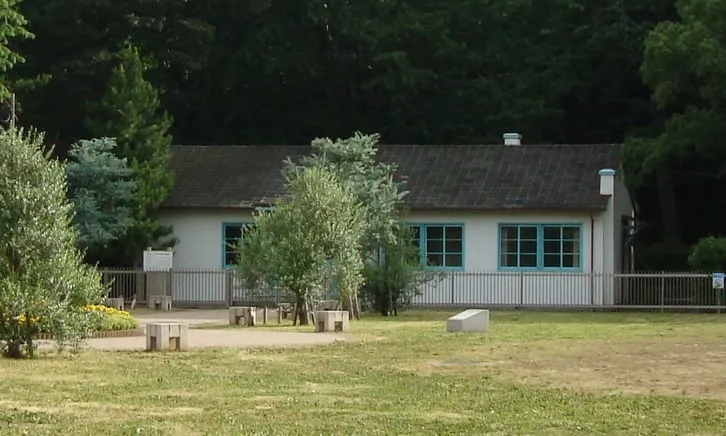
The original Olympic Memorial House in July 2011. The house rebuilt in 2026 keeps its exterior design, but details may differ. Photo: Harani0403 / Wikimedia Commons (CC BY-SA 3.0).
The athletics field, known as Oda Field, hosted the opening ceremony and competitions of the 1964 Tokyo Paralympics, the park association says. It is named for Oda Mikio, who won Japan’s first Olympic gold medal, in the triple jump at Amsterdam in 1928, and who led Japan’s track and field team at the 1964 Games. The field is closed through Nov 30, 2026, for work to renew its official certification, and again Dec 11–17 for inspection and repairs (checked Nov 11, 2026).
Next to the park stands Yoyogi National Gymnasium, the pair of arenas Tange Kenzo designed for the 1964 Olympics. According to the timeline of the Japan Sport Council, which runs it, the First Gymnasium held swimming and diving and the Second Gymnasium basketball. That December, the First Gymnasium opened to the public as an ice rink. The council describes the roof as the world’s first semi-rigid suspension structure.
The First Gymnasium returned for the Tokyo 2020 Games, held in 2021, with handball at the Olympics and wheelchair rugby and badminton at the Paralympics. In August 2021 the complex became a national Important Cultural Property, the council’s timeline notes. The Agency for Cultural Affairs had announced the recommendation that May, naming it simply Yoyogi Kyogijo.
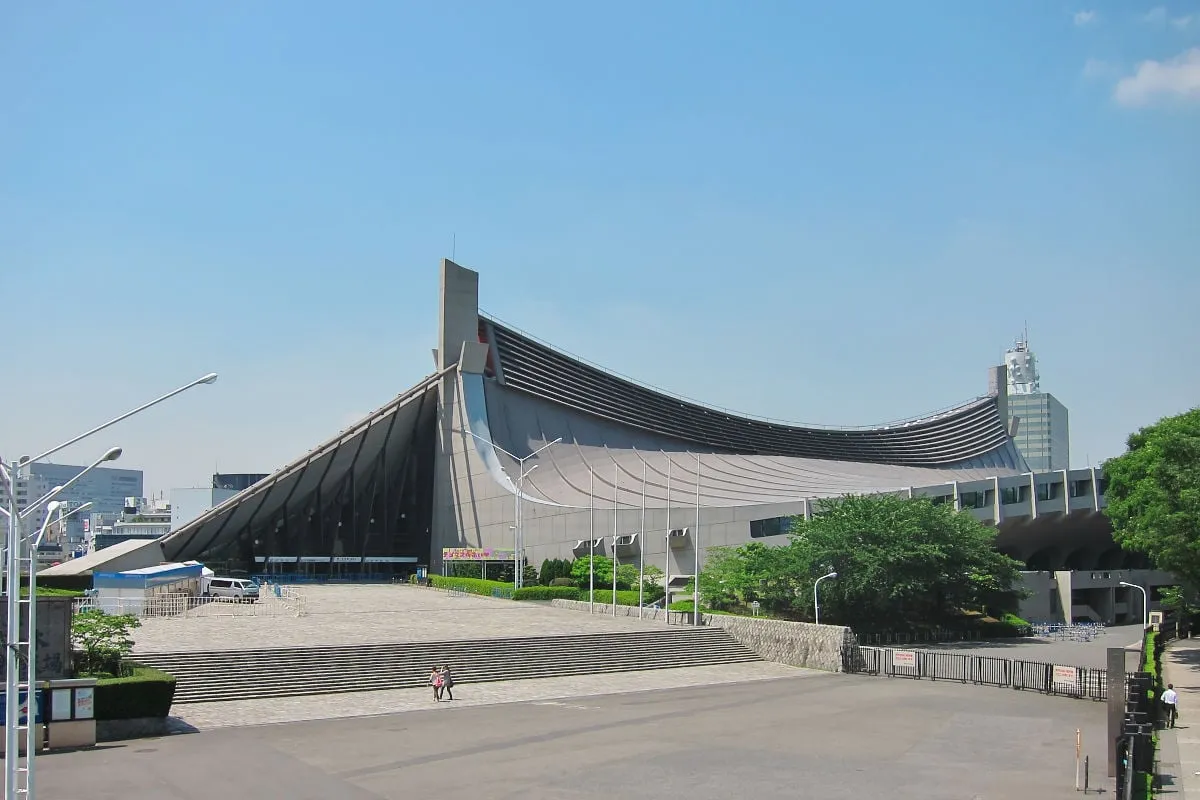
The First Gymnasium of Yoyogi National Gymnasium, built for the 1964 Olympics, in May 2010, before its 2018–19 seismic retrofit. Photo: Rs1421 / Wikimedia Commons (CC BY-SA 3.0).
What can you do in Yoyogi Park, and what is banned?
You can walk, picnic, rent a bike for the cycling course and watch birds. The park’s list of prohibited activities, dated June 9, 2023, rules out ball games and sports practice, drones and other radio-controlled toys, fires and barbecues, tents and tarps, and amplified music. If your idea of a park day is a game of catch and a grill, Yoyogi rules out both.
The same list bans skateboards and roller skates, unattended bags, and hammocks or slacklines tied to trees. It also bans climbing trees, feeding or collecting animals and plants, and riding motorbikes or Segways. Selling, commercial filming and busking for tips need a permit, and so do events and performances.
Skateboarders do have a corner of their own. The Jinnan 1-chome area of Section B, which the park association does not manage, has an outdoor urban sports park for skateboarding, and it posts its opening days on its own website.
The 2023 list also keeps walkers off the cycling course. Since April 20, 2026, the course has been for bikes only from 9 a.m. to 5 p.m.; outside those hours anyone may use it, with walkers first and runners second. The cycling center, reopened as pedalico on Dec 23, 2025, rents bikes for the course of about 2,000 meters. A bike without training wheels costs ¥300 an hour, a child’s bike with them ¥100, a tandem ¥500 a lap of about 15 minutes, and a helmet ¥100. The center opens 9 a.m.–4:30 p.m. (last rental 4 p.m.) and closes on Mondays, or the next day when Monday is a holiday, and from Dec 29 to Jan 3.
Sports have their own facilities: the athletics field, a field for soccer, rugby and hockey, and a basketball court. Dogs must be on a leash, and the park asks owners to take droppings home; the dog run needs advance registration.
For food, a kiosk by the Harajuku Gate sells soft-serve ice cream, draft beer, yakisoba and takoyaki from 9 a.m. to 5 p.m. The Doutor café in the rebuilt Olympic Memorial House opens daily from 7 a.m. to 8 p.m. Alcohol does not appear on the park’s list of prohibited activities. The park asks smokers to keep away from crowded spots and plazas, and it publishes a smoking-area map.
Two quieter features were firsts, by the park association’s account. The fenced bird sanctuary, planted with fruiting trees that wild birds favor, was the first in Japan; you cannot go in, but you can watch birds from the rest of the park. The observation deck, a raised walkway 145 meters long and 6 meters high that leads visitors into the park, was a first for Japan. Similar decks have since been built elsewhere.
When is the best time to visit Yoyogi Park?
Spring, for the cherry blossoms, and autumn, for ginkgo and maple color. The park association’s flower calendar lists Somei-yoshino cherries, dogwood and tulips in spring, and ginkgo and Japanese maple in autumn; summer brings hydrangeas and sunflowers, and winter plum blossoms and narcissus.
Cherry season is especially crowded, the park says, and it posts rules for it each spring. Its 2026 notice, dated March 9, banned claiming spots with ropes, pegs or paper signs and warned that unattended picnic sheets would be removed and thrown away without notice. It also banned fires, generators, amplified music, tents, tables and chairs, carts, hammocks, selling, and feeding crows and pigeons; all but the carts are banned all year.
The fountain works left fewer trash bins than usual, so the park set up three garbage stations that closed at 8 p.m., and it asked picnickers to finish by then. The stations, temporary toilets and smoking areas were scheduled to stay until April 12 (2026 season, checked Nov 11, 2026).
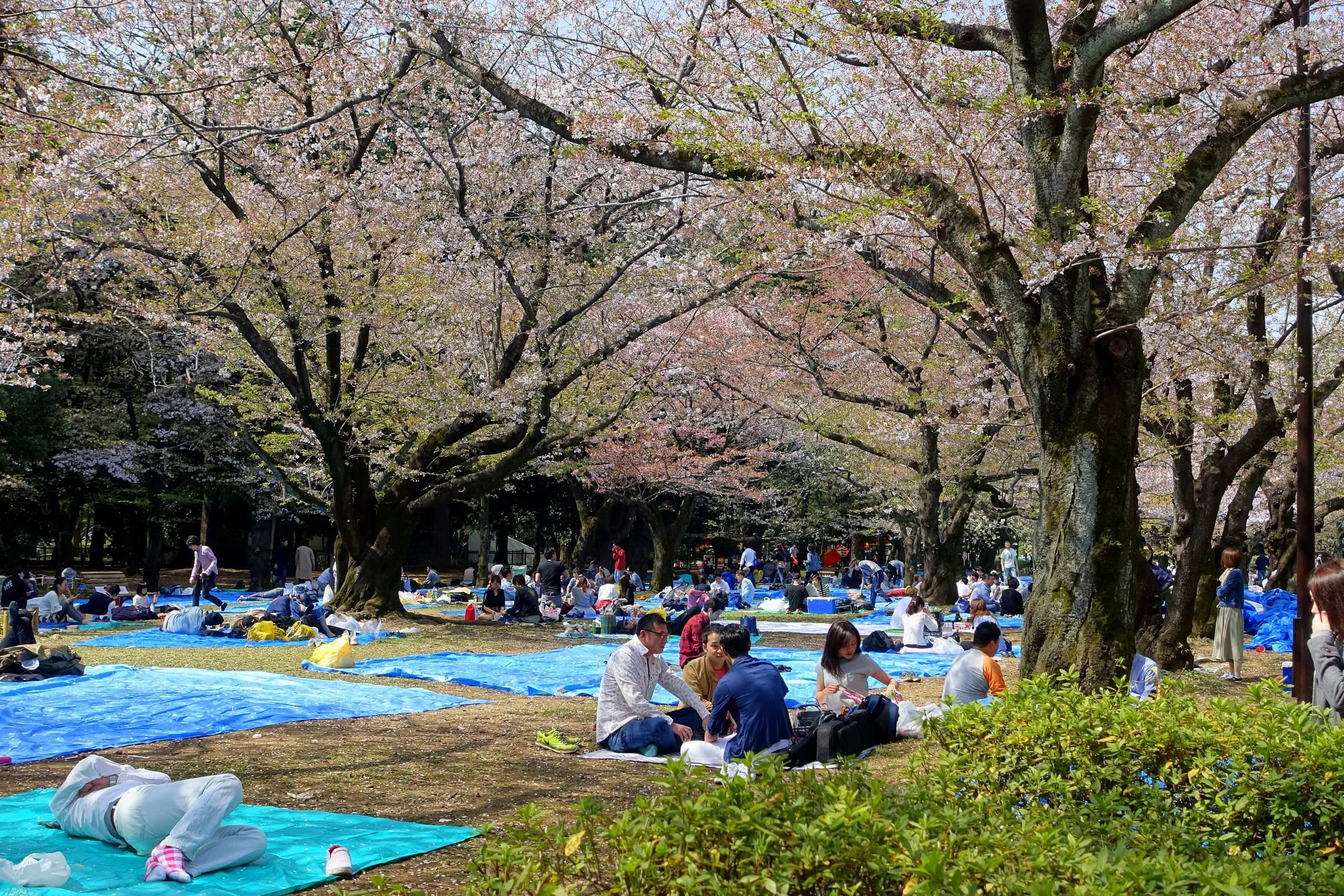
Picnickers on blue tarps under cherry trees in bloom in Yoyogi Park, in spring 2018. Photo: Daderot / Wikimedia Commons (CC0). Resized.
Late 2026 adds two reasons to come after dark. The fountain, under renovation since the summer of 2025, is due to reopen on Nov 13, 2026, as the Yoyogi Forest Oasis, the park association says. It is scheduled to run 9 a.m.–9 p.m., lit from 5 p.m., with 10-minute music shows at 5, 6, 7, 8 and 8:50 p.m. Through Jan 31, 2027, it will stay on until 11 p.m. The water corridor and rose garden around it will open when their construction ends.
From Nov 13, 2026, to Jan 11, 2027, an illumination event called Yoyogi Forest of Lights runs in the park, and the cycling course is closed from 5 to 10 p.m. while it does.
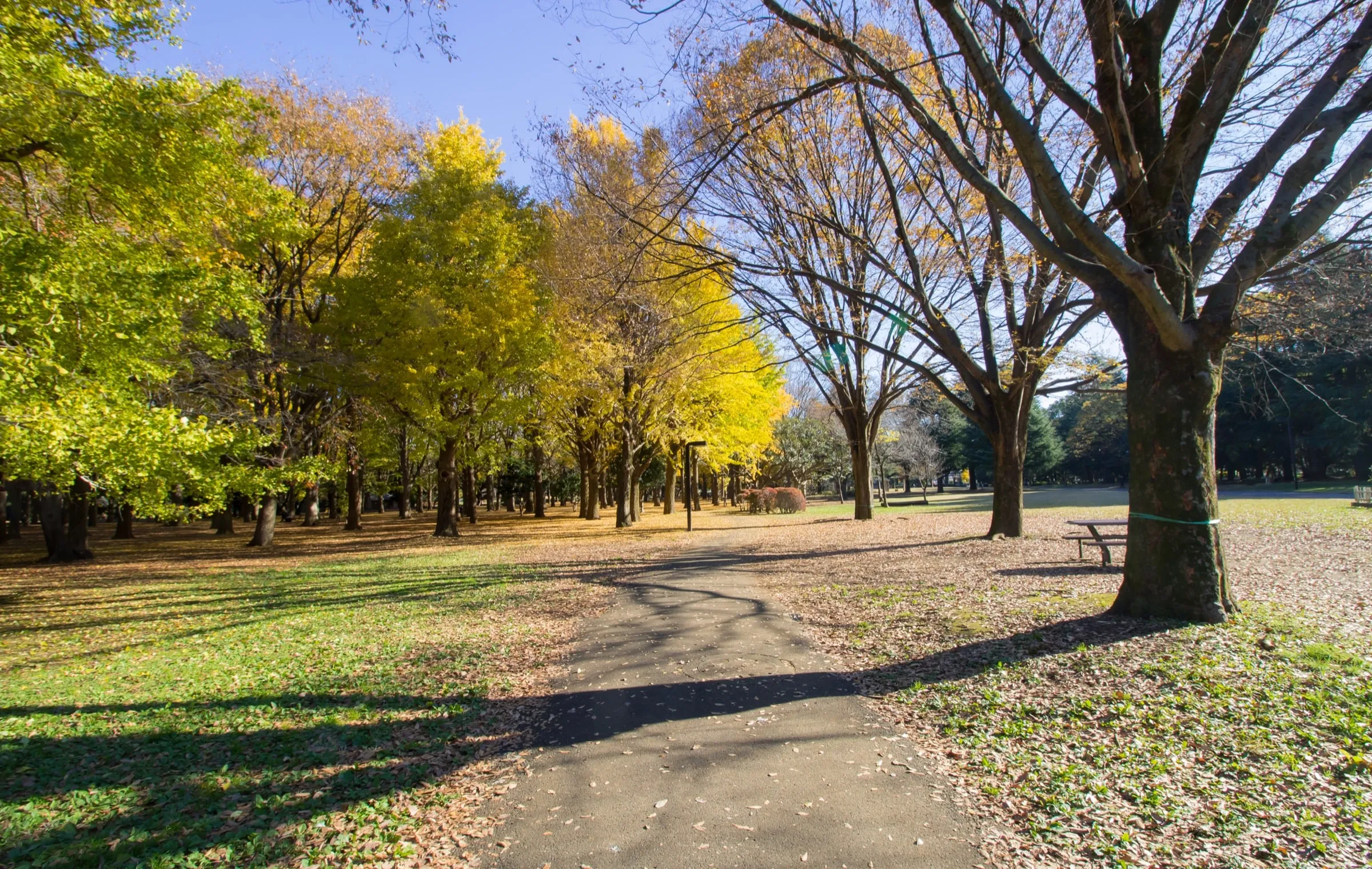
Autumn color along a path in Yoyogi Park, in November 2019. Photo: Kakidai / Wikimedia Commons (CC BY-SA 4.0). Resized.
What events are held in Yoyogi Park?
Festivals, mostly on weekends and holidays, held on the Event Plaza, the outdoor stage and the Keyaki Namiki, an avenue of zelkova trees. The park association posts each month’s list in Japanese on its Yoyogi Park news page, with the organizer and usually a link for each event.
In October and November 2026, the lists ran from regional fairs for Hokkaido and Kyushu to a Caribbean and Latin American festival, Fiesta de España and a Cambodian water festival (checked Nov 11, 2026). Organizers, not the park, run these events, so take dates, hours and any fees from their own sites.
Flea markets, like regional product fairs, need the park’s permission to use park land. No flea market appeared on the October or November 2026 lists, so if a market is the reason for your trip, find it on a monthly list before you go.
Yoyogi Park or Shinjuku Gyoen: which should you choose?
Choose Yoyogi Park for free entry at any hour and a picnic with a drink, and Shinjuku Gyoen for a gated national garden with an admission fee and stricter rules.
| Yoyogi Park | Shinjuku Gyoen | |
|---|---|---|
| Run by | Tokyo Metropolitan Government | Ministry of the Environment |
| Entry (adults) | Free | ¥500; ¥250 for students and people 65 and over; free through junior high school |
| Hours | Always open | From 9 a.m. Closes 4:30 p.m. from Oct 1 to Mar 14, and 6 p.m. or 7 p.m. the rest of the year; last entry 30 minutes before closing |
| Closed | Facilities close over New Year | Mondays (the next weekday when Monday is a holiday) and Dec 29–Jan 3; open daily Mar 25–Apr 24 and Nov 1–15 |
| Alcohol | Not on the prohibited list | Not allowed in |
| Ball games and drones | Banned | Banned |
Checked Nov 11, 2026, on the official pages of the Tokyo Metropolitan Park Association and the Ministry of the Environment.
Our Shinjuku Gyoen guide covers that garden in detail, and our Ueno Park guide covers another of Tokyo’s large public parks.
If you go
The park is about three minutes on foot from JR Harajuku Station, Yoyogi-koen Station and Meiji-jingumae “Harajuku” Station. On weekends and holidays the park asks visitors to use public transportation: the road outside gets congested, the 65-space parking lot can fill, and cars may not wait on the street to get in.
Enter at the Harajuku Gate and the Olympic Memorial House is on your right. From there, walk to the Central Plaza, the open lawn that the park association places at the very center of the park. Its Japanese map, a PDF on the official Yoyogi Park page, shows the layout of both sections.
Meiji Jingu’s forest borders the park, but the shrine is a separate precinct with its own gates and hours. It opens at sunrise and closes at sunset, from 6:40 a.m.–4:20 p.m. in January to 5 a.m.–6:30 p.m. in June, and entry is free, according to its English site. Our Meiji Jingu guide covers the visit.
The streets around Harajuku Station have guides of their own: Takeshita Street and Omotesando. From the gymnasium, you can walk on to Shibuya and its scramble crossing.
Before you leave, find the stone and the two busts. Japanese aviation began on this ground in 1910, and the park now leaves its sky to the birds.
More in Travel & Destinations
View all →
Sunshine City Ikebukuro: Aquarium, Observatory, and Tickets
Travel & Destinations · Tokyo
Imperial Palace Tokyo: Tours, East Gardens and Edo Castle
Travel & Destinations · Tokyo
Kabukiza Theatre: Single-Act Tickets, Captions and History
Travel & Destinations · Tokyo
Odaiba: Sea Forts, a Rainbow Bridge Walk and What Has Closed
Travel & Destinations · Tokyo
Related articles
Akihabara: How Tokyo's Electric Town Began, and When to Go
Travel & Destinations · Tokyo
Ebisu Garden Place: Brewery, Sky Lounge and Winter Lights
Travel & Destinations · Tokyo
Ginza, Tokyo: History, Landmarks, and Car-Free Weekends
Travel & Destinations · Tokyo


Hanayashiki Amusement Park: Rides, Tickets and 1853 Roots
Travel & Destinations · Tokyo