Akihabara: How Tokyo's Electric Town Began, and When to Go
Why Akihabara is named after a fire-prevention shrine, how radio stalls under the tracks built Electric Town, and when Chuo-dori goes car-free.
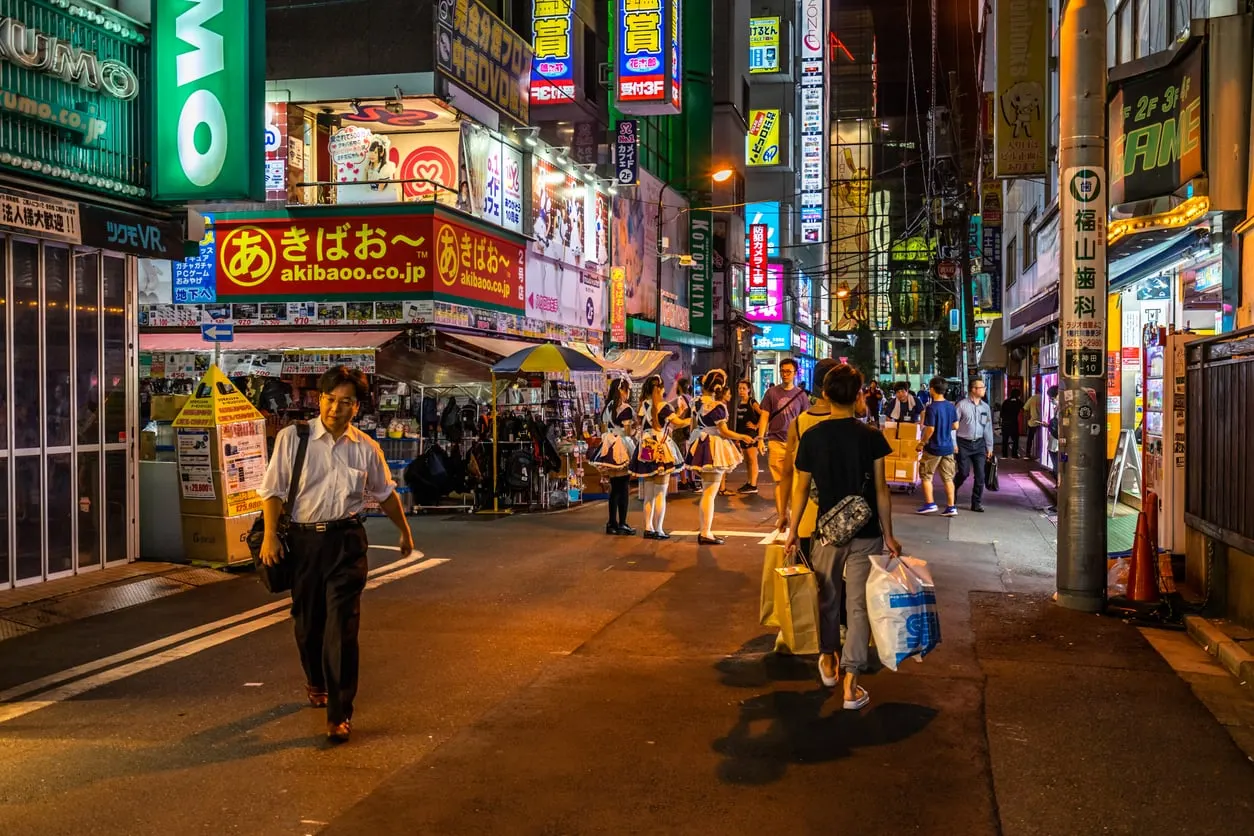
JR Akihabara Station keeps a branch of a shrine in its stationmaster’s office, according to Chiyoda City. The original shrine was built in 1870 on a firebreak cleared after a fire in 1869, and people called the empty ground Akiba-no-hara, the field of Akiba. The radio stalls that turned the area into Electric Town arrived nearly 80 years later, after the occupation authorities ordered them off the roads.
Akihabara, often shortened to Akiba, is a shopping district around Akihabara Station in central Tokyo, known as Akihabara Electric Town (Denkigai) for the electronics shops that grew there after World War II, and more recently for anime, manga, games and idols. Its main street, Chuo-dori, runs through Sotokanda in Chiyoda City and closes to cars on Sunday afternoons. The JR Yamanote Line gets there in four minutes from Tokyo Station, according to GO TOKYO.
At a glance
| Where | Sotokanda, Chiyoda City: Chuo-dori from the Manseibashi intersection north to the Sotokanda 5-chome intersection. JR Akihabara Station, Electric Town Exit |
| Trains | Akihabara Station: JR Yamanote, Keihin-Tohoku and Sobu lines, Tokyo Metro Hibiya Line, Tsukuba Express. 4 min from Tokyo Station (Yamanote Line), 18 min from Shinjuku (Sobu Line), about 5 min from Asakusa (Tsukuba Express). Suehirocho Station (Tokyo Metro Ginza Line) also serves the area |
| From the airports | Haneda 45 min; Narita about 1 hr 30 min, by train |
| Car-free Sundays | Chuo-dori, about 570 m: 1–6 p.m. April–September, 1–5 p.m. October–March. May be called off for rain, storms, strong wind or a bad forecast |
| Street rules | No smoking on the street. In the car-free zone: no selling, performing, street concerts or cycling |
| Tax-free shopping | Since Nov 1, 2026, you pay the tax at the register and get it back after a customs check when you leave Japan. Minimum ¥5,000 before tax, per store, per day |
| Nearby | Kanda Myojin, 7 min on foot from the Electric Town Exit. 2k540 AKI-OKA ARTISAN, 6 min; 11 a.m.–7 p.m., closed Wednesdays |
| Official info | Akihabara Electrical Town Organization (Japanese); GO TOKYO |
Checked Nov 13, 2026, against the Akihabara Electrical Town Organization’s pedestrian zone and train pages, GO TOKYO, the Japan Tourism Agency’s tax-free page, Chiyoda City’s page on its living environment ordinance, and the official sites of Kanda Myojin and 2k540. Train times are approximate.
Why is it called Akihabara, and where does “Akiba” come from?
Akihabara is named after a fire-prevention shrine that once stood on the site. In 1869, after the great Aioi-cho fire, Tokyo Prefecture cleared a firebreak of about 30,000 square meters here, according to the history pages of the local Akihabara Electrical Town Organization.
In 1870 a shrine to quell fires, Chinka Jinja, was set up on the cleared ground. The organization says the deity enshrined there was Akiba Daigongen, worshipped for protection from fire and brought in from Enshu (today’s Shizuoka Prefecture). Chiyoda City’s history sign for the neighborhood does not name the deity; it says people came to call the place Akiba-no-hara or Akibappara because the Akiba shrine in Shizuoka was a fire-prevention shrine.
The organization adds that the ground was first called Chinkahara and became Akibahara or Akibappara once the shrine was renamed Akiba Jinja, and that this older reading is where the short form Akiba comes from. When the railway was extended from Ueno in 1890 and a station opened here, it was named Akihabara, and that reading spread across Japan, it says.
The shrine itself moved to Taito City and now stands in Matsugaya, the organization says. Chiyoda City’s sign, put up in 2004, adds that a branch of it is kept in the stationmaster’s office of JR Akihabara Station.
Postal addresses add one more twist. Japan Post lists Akihabara as a neighborhood of Taito City, postal code 110-0006, while the Electric Town’s main street runs through Sotokanda, in Chiyoda City. Around Manseibashi, three old towns were merged into Sotokanda 1-chome when addresses were reorganized in 1964, Chiyoda City says.
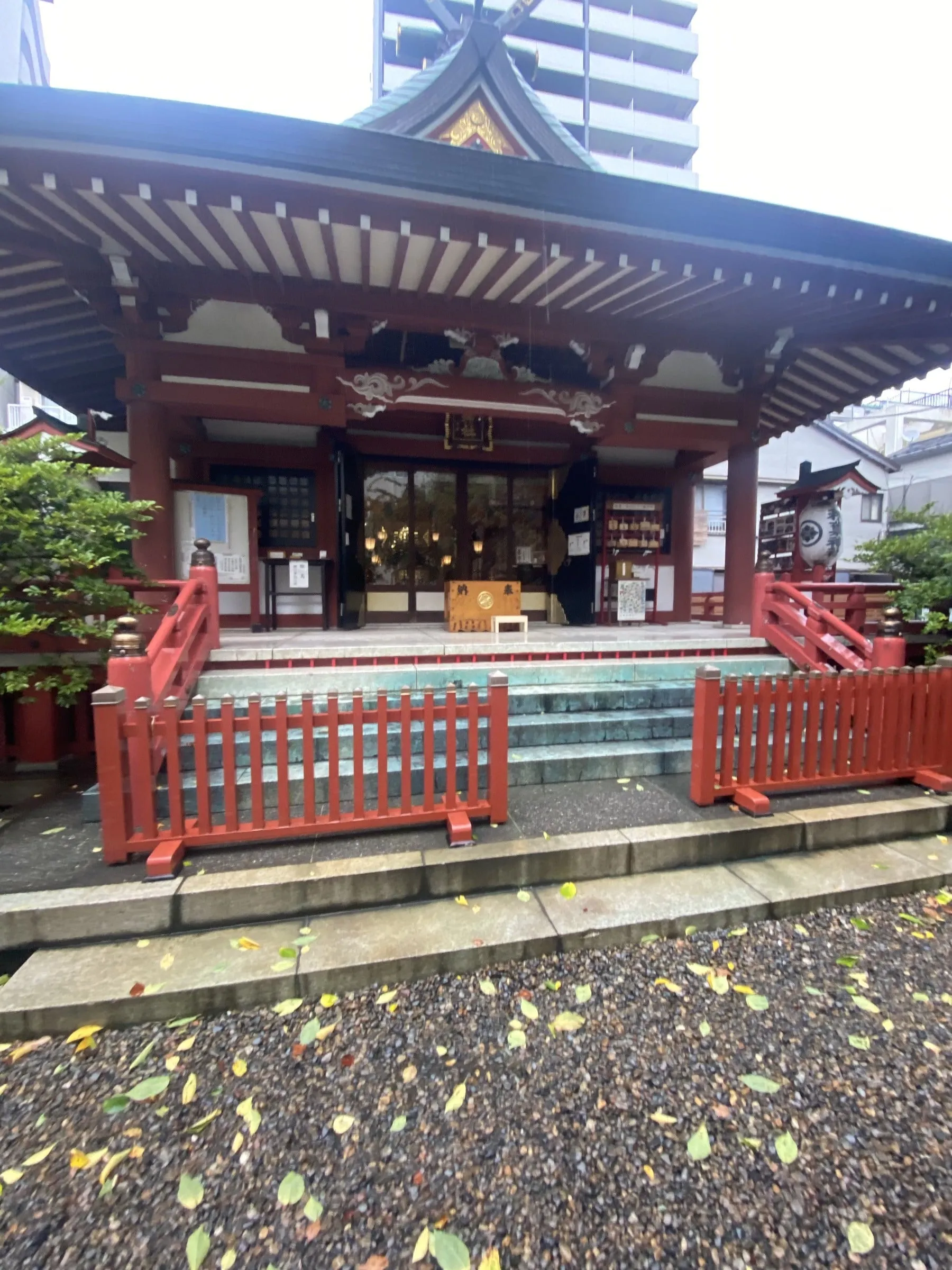
The worship hall of Akiba Shrine in Matsugaya, Taito City, where the shrine that gave Akihabara its name now stands, in August 2024. Photo: Immanuelle / Wikimedia Commons (CC BY 4.0). Resized.
How did Akihabara become Electric Town?
Akihabara became Electric Town when radio-parts sellers, cleared off Tokyo’s streets after World War II, were given space under its railway tracks. Wholesalers and shops selling electrical parts and radios were already in the area before the war, Chiyoda City says, but air raids left it burned to the ground.
After the war, black markets around Surugadai and Ogawamachi gradually came to specialize in radio parts, the Electrical Town Organization’s history says. In 1949 the occupation’s General Headquarters (GHQ) ordered street stalls removed so that main roads could be built and widened. The vendors asked for roofed space instead, and the Tokyo government, working with Japanese National Railways, offered them sites under the tracks at Akihabara Station.
A shop called Radio Store opened directly beneath the line in 1949. From 1950 the vendors moved in group by group: Radio Center opened, Tokyo Radio Department Store went up across the street beside the tracks, and the next year Radio Garden appeared at the foot of Manseibashi bridge, the organization records. Chiyoda City’s sign also dates the move to 1949 and says the order came from the Allied forces.
Parts sold because a finished radio cost two to three times as much as the parts to build one, so many people bought radios assembled from parts, the organization explains. Commercial radio broadcasting began in 1951. Many shops and buildings in Akihabara still carry the word radio, or musen (“wireless”), because they were founded and named in those years, it adds.
Home appliances came next. In the appliance trade, 1953, when television broadcasting began, is known as year one of home electronics, the organization says. Its history also tracks how fast the “three sacred treasures” of the era spread: ownership of black-and-white TVs rose from 7.8% in 1957 to 95.0% in 1965, washing machines from 20.2% to 78.1%, and refrigerators from 2.8% to 68.7%. From around 1979, it notes, more Akihabara shops began handling computers.
What is Akihabara known for today?
Today Akihabara is known for two things at once: electronics, and the anime, manga and games culture that grew up among the electronics shops. GO TOKYO, Tokyo’s official tourism site, describes megastores competing alongside specialty parts shops, and Akihabara Radio Center, the market that started under the tracks, selling amateur radio and electronic equipment.
The same guide says otaku culture, the fandom around games, manga, figure collecting and anime, has its roots in Akihabara. Akihabara Radio Kaikan, despite its name, now sells anime and character goods, it notes, and stores devoted to single obsessions are squeezed in between the component shops, along with themed cafés, a capsule-toy store and costume and photo studios.
Idols are part of the picture too: GO TOKYO calls the AKB48 Theater the birthplace of the group AKB48. It also notes that the streets can become crowded on weekends if groups of cosplayers arrive.
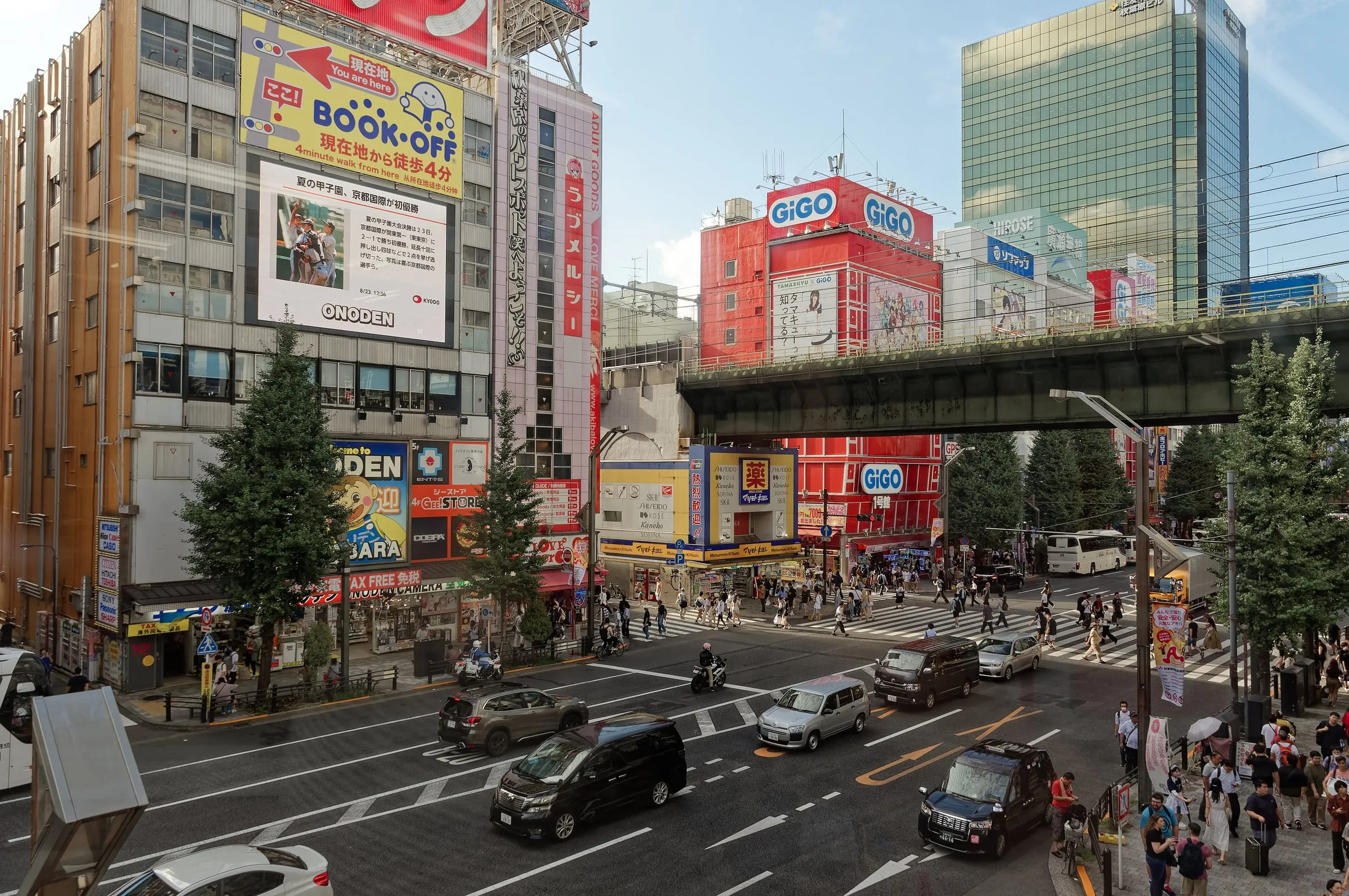
A busy intersection in Akihabara Electric Town in August 2024, with a railway bridge over the street. Photo: Jakub Hałun / Wikimedia Commons (CC BY 4.0). Resized.
When is Chuo-dori closed to cars?
Chuo-dori becomes a pedestrian zone every Sunday afternoon: 1–6 p.m. from April to September and 1–5 p.m. from October to March, according to the Akihabara Electrical Town Organization. The Japanese term is hokosha tengoku, “pedestrian paradise.” The closed stretch runs about 570 meters, from the Sotokanda 5-chome intersection to the Manseibashi intersection.
It can be called off for rain, storms or strong wind, or when bad weather is forecast. The organization’s pedestrian zone page lists Sundays only.
The road is for walking, not for business. Selling goods, performing, street concerts and cycling are all banned inside the zone, the organization says. Smoking on the street is banned throughout Chiyoda City under its living environment ordinance, according to the city. The Akihabara Agreement, a voluntary code that local neighborhood and shopping associations adopted in 2010, also asks shops to keep their queues out of pedestrians’ way.
The zone first opened on June 10, 1973, according to a photo caption in the organization’s history.
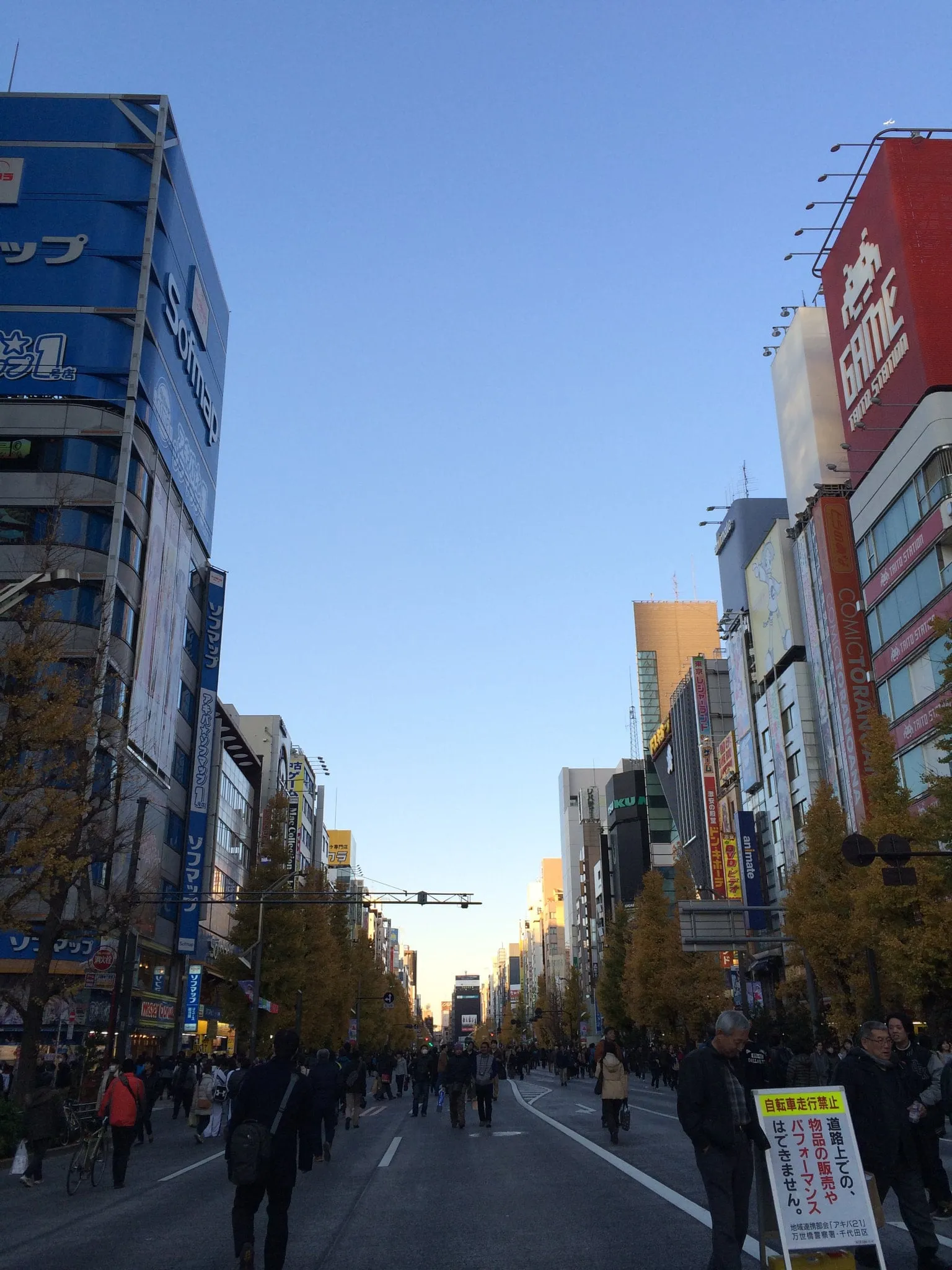
Chuo-dori closed to cars for the Sunday pedestrian zone in 2013. The sign at right, from local groups, the Manseibashi police and Chiyoda City, bans cycling and any selling or performing on the road. Photo: Sorah Fukumori / Wikimedia Commons (CC BY 3.0).
What is there to do in Akihabara besides electronics and anime?
Beyond the shops, there is a crafts arcade under the tracks just north of the station and a shrine that counts the district as part of its parish.
2k540 AKI-OKA ARTISAN sits under the JR Yamanote Line tracks between Akihabara and Okachimachi stations. Its operator, JR East Urban Development, describes shops that double as workshops, goods sold only here and hands-on making classes, with small-batch work by young craftspeople and designers. The operator notes that Okachimachi was once a town of traditional craftspeople, and that jewelry and leather shops still remain.
Its name is a railway address. In railway terms, the operator explains, locations here are given as distances from Tokyo Station, and the arcade sits near the 2 km 540 m mark, so it is called 2k540, read “ni-kei-go-yon-maru.” AKI-OKA joins Akihabara and Okachimachi, and artisan is French for craftsperson. The arcade is open 11 a.m.–7 p.m. and closed on Wednesdays.
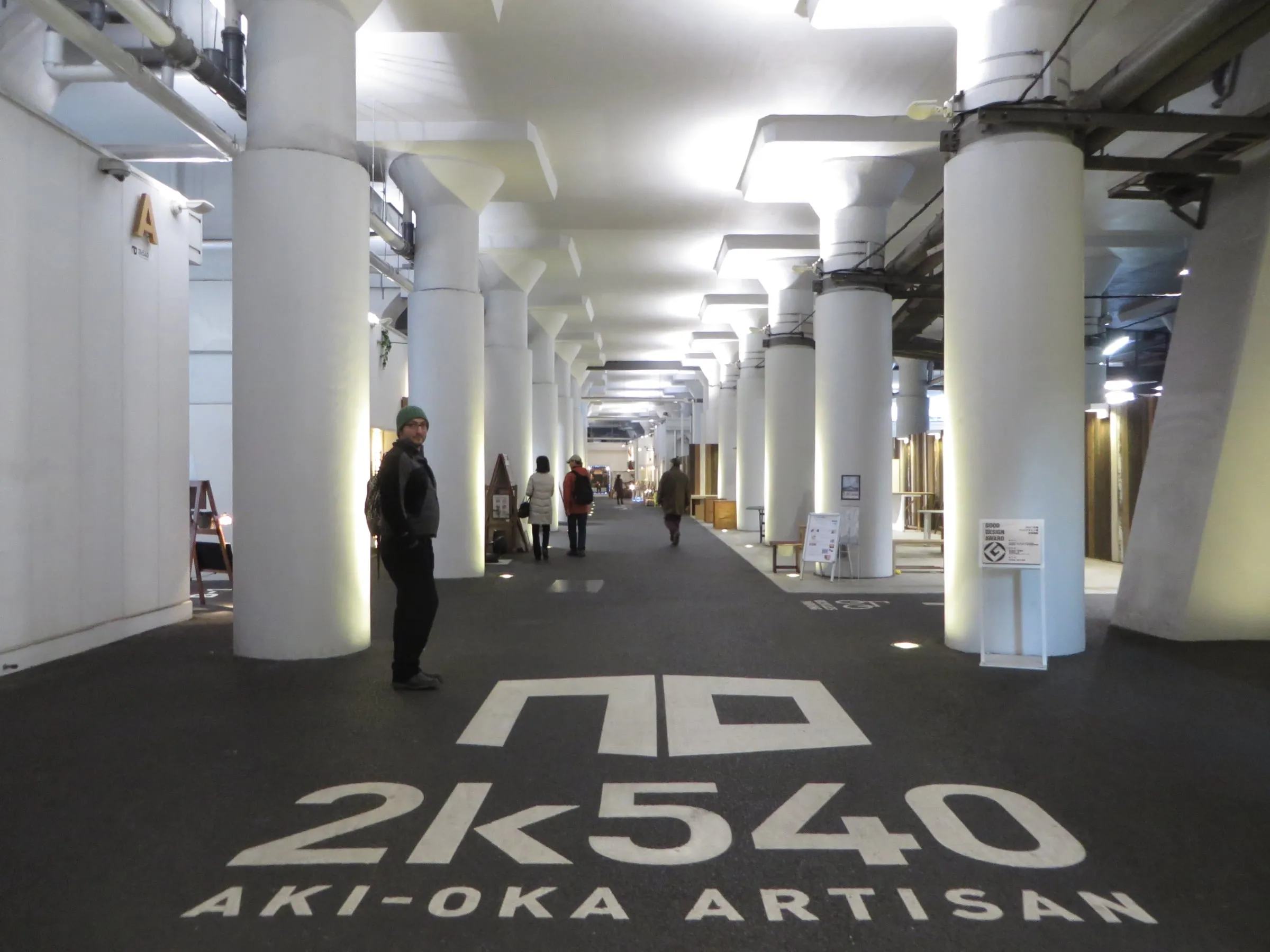
The corridor of 2k540 AKI-OKA ARTISAN under the JR Yamanote Line tracks, with its name painted on the floor, in January 2014. Photo: William J Sisti / Wikimedia Commons (CC BY-SA 2.0). Resized.
Kanda Myojin, seven minutes on foot from the Electric Town Exit, describes itself as the guardian shrine of 108 neighborhoods, among them Akihabara, Kanda, Nihonbashi and Otemachi-Marunouchi. The shrine says it was founded in 730; our Kanda Myojin guide covers a visit.
The name Manseibashi, which you will see on the intersection at the zone’s south end, comes from a bridge. Chiyoda City says it began as Yorozuyo-bashi, built in 1873 a little downstream of Shoheibashi; people came to call it Manseibashi, and it was rebuilt close to its present site in 1903.
How does tax-free shopping work in Akihabara now?
If you buy electronics or anything else tax-free in Akihabara, you now pay the tax at the register and get it back when you leave Japan. For purchases made on or after Nov 1, 2026, Japan switched to a refund method, according to the Japan Tourism Agency: tax-free shops charge the tax-inclusive price, and the tax is refunded after customs confirms at the airport or seaport that the goods are leaving the country.
To qualify, you must spend ¥5,000 or more, before tax, at the same store in one day. Within 90 days of the purchase, show your passport at a tax-free procedure terminal in the departure lobby before you check your bags. You need every item with you, and if one item from a receipt is missing, nothing on that receipt is refunded.
At seven busy airports, including Narita and Haneda, short-term visitors can also do this step online through Visit Japan Web instead of at a terminal, the agency says. Older guides that tell you to show your passport at the counter and pay no tax describe the system that ended in October 2026.
If you go
Start at the Electric Town Exit of JR Akihabara Station. The Akihabara of today took shape from the electronics shops along Chuo-dori and around this exit, the Electrical Town Organization’s history says.
On a Sunday afternoon, walk the car-free stretch of Chuo-dori from the Manseibashi intersection north to Sotokanda 5-chome. From Suehirocho Station on the Tokyo Metro Ginza Line, Kanda Myojin is five minutes on foot, the shrine says, and 2k540 is three minutes, according to its operator.
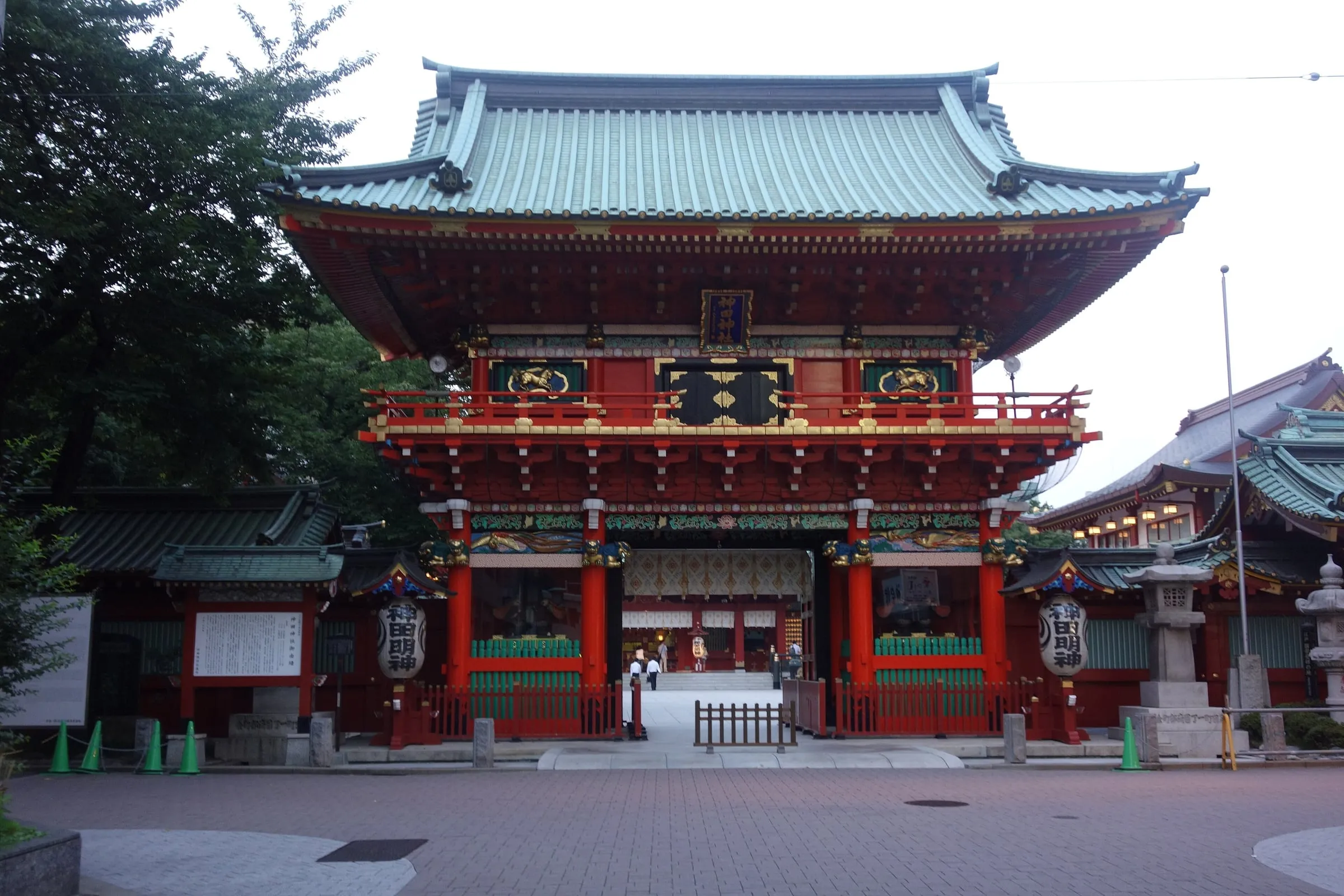
Zuishinmon, the main gate of Kanda Myojin, in August 2013. Photo: pelican / Wikimedia Commons (CC BY-SA 2.0). Resized.
Akihabara is not in Shinjuku or Shibuya. Electric Town is in Chiyoda City, 18 minutes from Shinjuku on the JR Sobu Line, according to GO TOKYO, and about 30 minutes from Shibuya on the JR Yamanote Line, by the organization’s count.
The lines that meet here run straight to other neighborhoods, with times from the organization’s train guide. The Tsukuba Express reaches Asakusa in about five minutes, for Senso-ji, and the JR Yamanote and Keihin-Tohoku lines reach Ueno in about five, for Ueno Park. The Hibiya Line gets to Tsukiji in about nine, for the Tsukiji Outer Market, and the Ginza Line runs from Suehirocho to Ginza in about eight.
Somewhere in the station behind you, by Chiyoda City’s account, a branch of the shrine raised against fire sits in the stationmaster’s office.
More in Travel & Destinations
View all →
Imperial Palace Tokyo: Tours, East Gardens and Edo Castle
Travel & Destinations · Tokyo
Kabukiza Theatre: Single-Act Tickets, Captions and History
Travel & Destinations · Tokyo
Odaiba: Sea Forts, a Rainbow Bridge Walk and What Has Closed
Travel & Destinations · Tokyo
Roppongi Hills: Observation Deck, Museum, and the 47 Ronin
Travel & Destinations · Tokyo
Related articles
Ebisu Garden Place: Brewery, Sky Lounge and Winter Lights
Travel & Destinations · Tokyo
Ginza, Tokyo: History, Landmarks, and Car-Free Weekends
Travel & Destinations · Tokyo
Hanayashiki Amusement Park: Rides, Tickets and 1853 Roots
Travel & Destinations · Tokyo


Sunshine City Ikebukuro: Aquarium, Observatory, and Tickets
Travel & Destinations · Tokyo