Ueno Park: Museums, Cherry Blossoms, and a Temple’s Past
How a burned temple hill became Ueno Park, which museums to choose, when the cherry trees and lotuses peak, and how to walk it from the station.
Ueno Park has a memorial to Dr. Bauduin, a Dutch army surgeon, and until 2006 it showed the wrong man. Because of an error in Dutch government records, the park’s official site says, the likeness was of his younger brother. The real doctor is said to have urged Japan’s new government to make this burned temple hill a park rather than a medical school.
Ueno Park, officially Ueno Onshi Park (onshi means an imperial gift), is a public park in Tokyo’s Taito City made up of a plateau known as the Ueno hill and Shinobazu Pond. On land that once belonged to the temple Kan’eiji, it holds the Tokyo National Museum, the National Museum of Western Art, the National Museum of Nature and Science and Ueno Zoo. Entry is free, the grounds are open 5 a.m.–11 p.m., and JR Ueno Station is two minutes away on foot, according to the park’s official pages.
At a glance
| Where | Taito City, Tokyo. JR Ueno Station, 2 minutes on foot (use the Park Exit for the museums); Tokyo Metro Ueno Station (Ginza and Hibiya lines), 4 minutes; Keisei Ueno Station, 1 minute. Access |
| Hours | Grounds open daily, 5 a.m.–11 p.m., with no entry outside those hours. Museums, the zoo and the boats keep their own hours. Park overview |
| Cost | Free to enter; museums, the zoo and the boats charge separately. Park guide |
| Size | About 54 hectares (133 acres), roughly a sixth of New York’s Central Park. Park overview |
| Seasons | About 1,200 cherry trees flower over roughly two months; Shinobazu Pond’s lotuses peak in late July. Park overview, Highlights |
| Don’t miss | The fountain on the site of Kan’eiji’s main hall, Kiyomizu Kannon-do and its Moon Pine, Bentendo on the pond, the Saigo Takamori statue. Highlights, Kiyomizu Kannon-do |
| Rules | Drones, skateboards and golf practice are banned, and visitors are asked not to set off fireworks; dogs must be leashed. Park rules |
| Official site | Ueno Onshi Park (Tokyo Metropolitan Government, in Japanese) |
Checked Nov 11, 2026, against the Tokyo Metropolitan Government’s Ueno Onshi Park pages, the Tokyo Metropolitan Park Association and the Japan Tourism Agency’s text on Kiyomizu Kannon-do; the size comparison uses the Central Park Conservancy’s figure of 843 acres.
How did a temple’s grounds become Ueno Park?
Ueno Park was carved out of Kan’eiji, a temple that lost most of its land after a battle in 1868. The temple says the priest Tenkai founded it in 1625 on the Ueno hill, northeast of Edo Castle, whose inner grounds are now part of the Imperial Palace.
Its mountain name, Toeizan, means “the Mount Hiei of the east,” after Mount Hiei near Kyoto, home of the temple Enryakuji. Once the mausoleum of Tokugawa Ietsuna, the fourth shogun, was built here, Kan’eiji also became a family temple of the Tokugawa shoguns. At its height it covered about twice the area of today’s park and had 36 subtemples, according to the National Diet Library.
Then came 1868. The Shogitai, a band formed to guard the last shogun, Tokugawa Yoshinobu, dug in on the hill, and the new government’s army beat it in about half a day, Kan’eiji says. The temple’s buildings burned one after another. Accused of sheltering the Shogitai, Kan’eiji lost all its grounds and later got back only about a tenth of what it had held at its peak.
According to the National Diet Library, only a few structures survived, among them Kiyomizu Kannon-do, Ueno Toshogu shrine and a five-story pagoda. The new government asked for the hilltop as the site for a school of Western medicine, the forerunner of the University of Tokyo’s medical school, the library adds. Dr. Bauduin, who was in Japan to teach Western medicine, is said to have urged a park instead; the park’s own site calls him, in effect, its parent.
In 1873 the Dajokan, the government’s Council of State, asked prefectures to turn scenic and historic places, temple grounds among them, into parks for everyone to enjoy. Ueno was designated with Shiba, Asakusa, Fukagawa and Asukayama, which Tokyo’s Bureau of Construction describes as Japan’s first parks. The bureau gives Oct 19, 1873, as the opening date; Emperor Meiji attended a formal opening ceremony in 1876, the library says.
The museum and the zoo followed in 1882. In 1924, to mark the wedding of the crown prince, the future Emperor Showa, the park was granted to the City of Tokyo as an imperial gift, according to the library; that gift is the onshi in its official name.
Stand by the fountain in front of the Tokyo National Museum and you are on the site of Kan’eiji’s Edo-period main hall, the park says. The plaza takes its name, Takenodai, from the raised stands of bamboo on either side of the hall, and the present fountain plaza was finished in May 2012, during Tokyo’s renewal of the park.
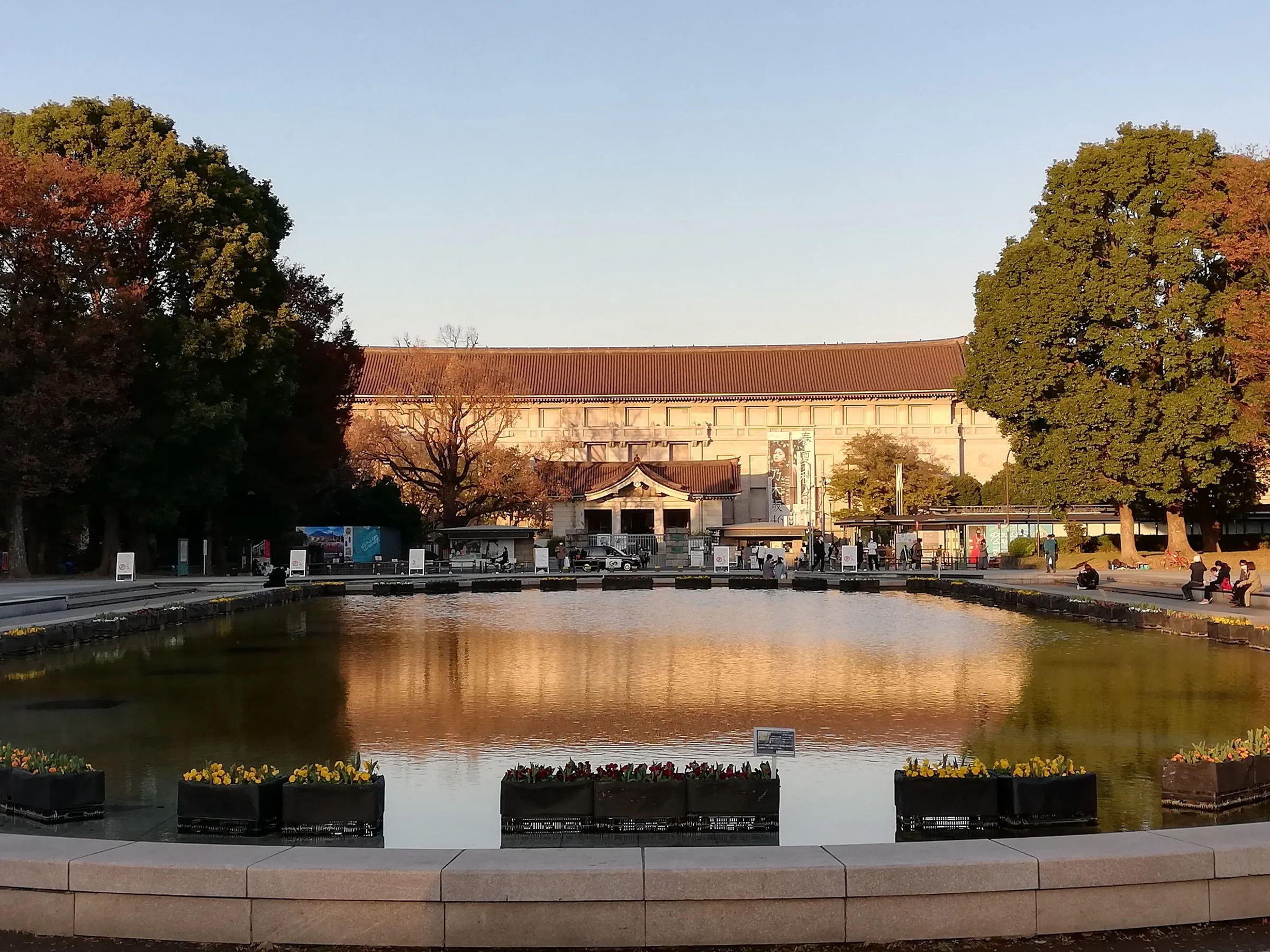
The fountain at Takenodai, on the site of Kan’eiji’s Edo-period main hall, with the Tokyo National Museum’s main building behind it, in November 2021. Photo: 先従隗始 / Wikimedia Commons (CC0). Resized.
Which museums in Ueno Park should you choose?
Choose Ueno Park’s museums by subject, then check the calendar: the three national museums here close on Mondays (or on the next weekday when Monday is a public holiday) and for several days at the turn of the year. The Tokyo National Museum, beyond the fountain, has galleries that include a Japanese Gallery (Honkan) and an Asian Gallery (Toyokan). Its own history traces it to an exhibition held at Yushima Seido in 1872 and a move to Ueno in 1882; our Tokyo National Museum guide goes further.
Adult tickets for its collection galleries cost ¥1,000. It opens 9:30 a.m.–5 p.m., until 8 p.m. on Fridays and Saturdays. Since Aug 1, 2026, suitcases have not been allowed on the museum grounds, and bag checks with metal detectors began at the main gate on Sept 8, 2026.
The National Museum of Western Art occupies a main building by the French architect Le Corbusier, completed in 1959. That building joined the World Heritage List in 2016 as part of Le Corbusier’s architectural work. The permanent collection costs ¥500 for adults and is free for visitors under 18 and those 65 and over. Its visitor guide lists a planned closure of those galleries for facility work from Jan 12 to March 19, 2027, so check the museum’s notices before a winter visit.
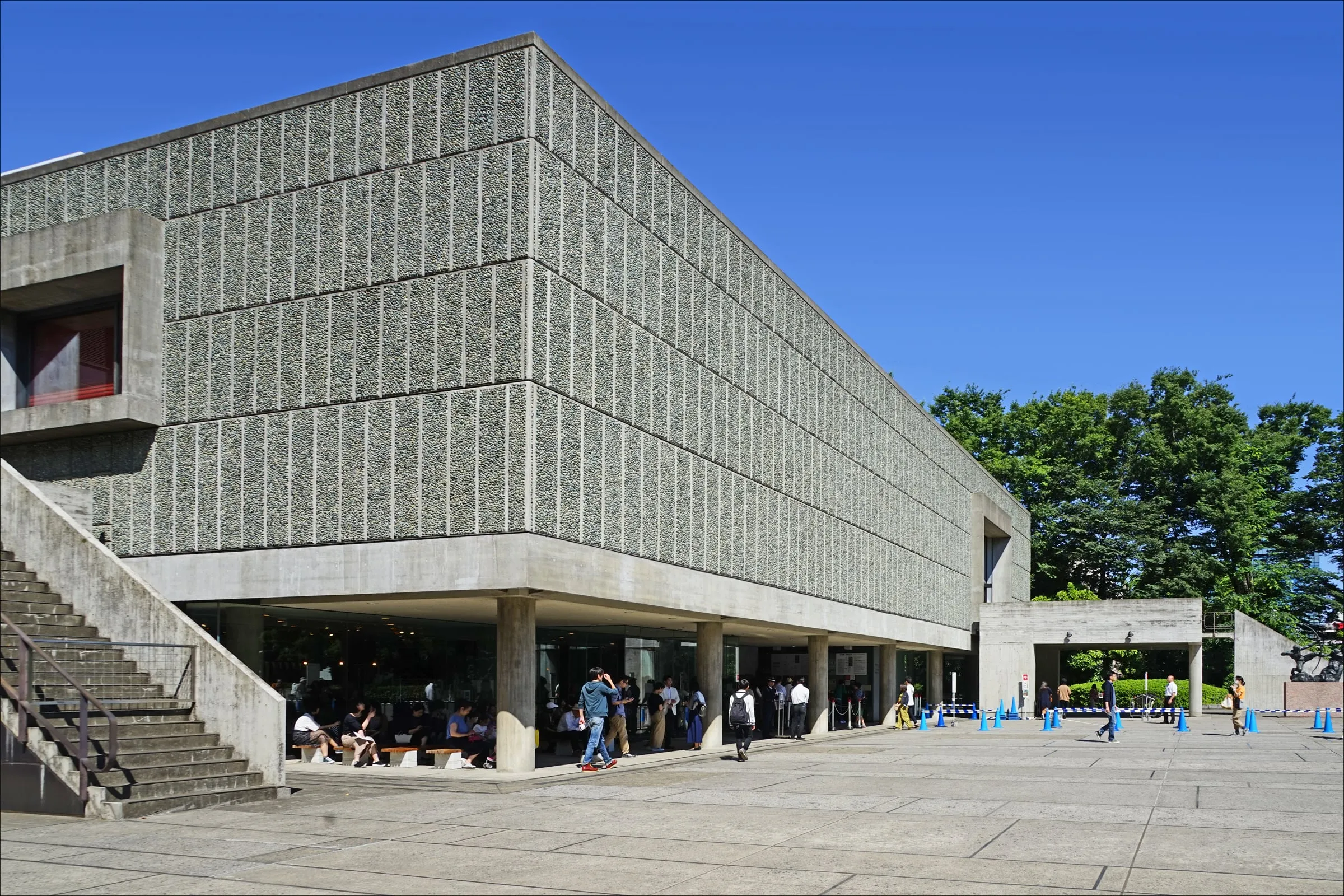
The National Museum of Western Art’s main building, designed by Le Corbusier, in May 2018. Photo: Jean-Pierre Dalbéra / Wikimedia Commons (CC BY 2.0).
The National Museum of Nature and Science opens 9 a.m.–5 p.m. and charges ¥630 for adults, with free entry for high school students and younger and for visitors 65 and over.
The Tokyo Metropolitan Art Museum has a story of its own. It opened on May 1, 1926, as Japan’s first public art museum, built with ¥1 million donated by Sato Keitaro, a Kitakyushu coal merchant, the museum says. Its present building, by the architect Maekawa Kunio, was completed in 1975.
Smaller stops sit close by. The International Library of Children’s Literature occupies the former Imperial Library building, completed in 1906, about 10 minutes on foot from the Park Exit. The park also lists the Tokyo University of the Arts Museum among its facilities, and JNTO adds the Ueno Royal Museum and the Shitamachi Museum, on everyday life in old Tokyo, near Shinobazu Pond.
When do Ueno Park’s cherry blossoms and lotuses bloom?
Plan on late March for the cherries and late July for the lotuses. In an average year, Tokyo’s Somei-yoshino cherries open around March 24 and reach full bloom around March 31, according to the Japan Meteorological Agency, which times the city’s season by a sample tree at Yasukuni Shrine (averages for 1991–2020). The park itself says its lotuses peak in late July.
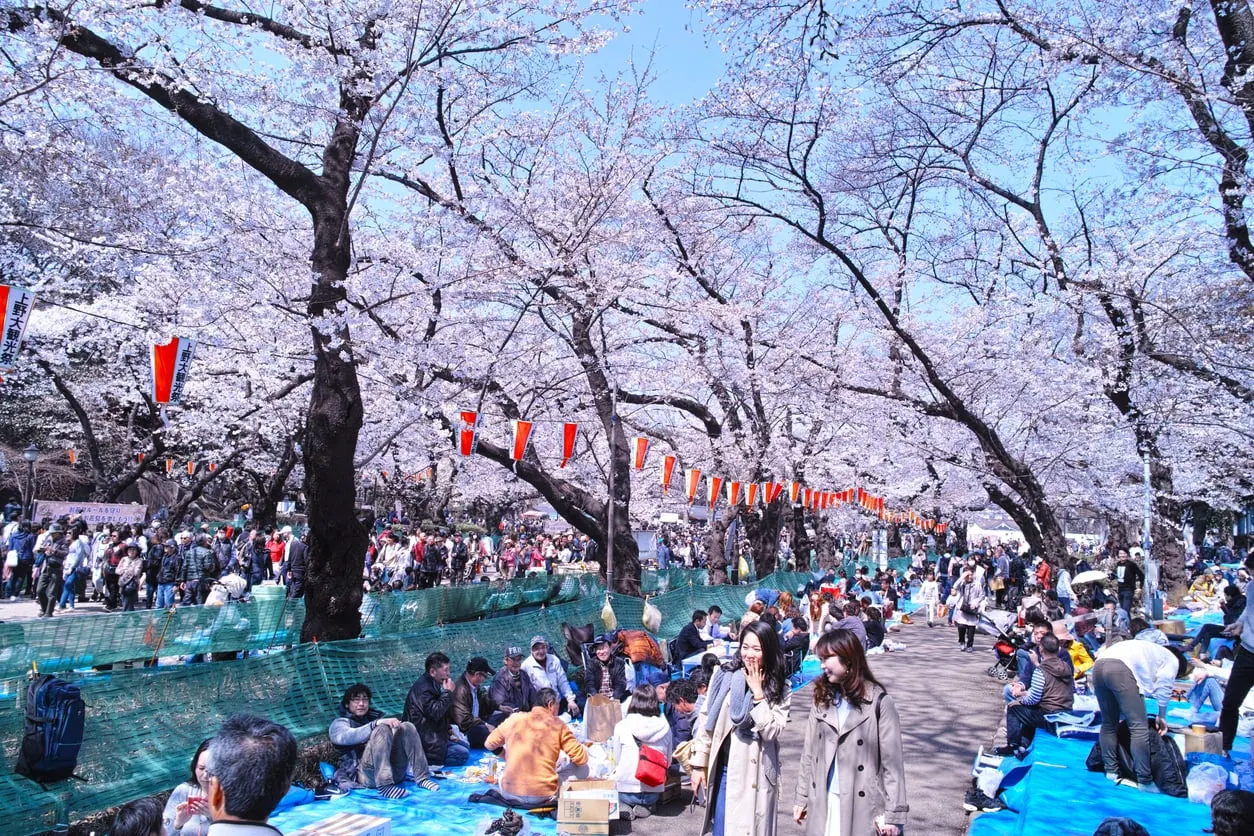
Ueno’s own cherry season is longer. The park office counts about 1,200 cherry trees, which flower over about two months, from the early-flowering kanzakura to the Somei-yoshino.
The Ueno Sakura Matsuri, the park’s cherry festival, ran from March 14 to April 5 in 2026, with 800 lanterns along the central avenue, according to GO TOKYO, Tokyo’s official travel site (2026 season, checked Nov 11, 2026). The dates move with the flowering, so check the 2027 listing before you book.
The trees have keepers. Since fiscal 2006, the Ueno Sakuramori no Kai (roughly, “Ueno cherry guardians”), a group formed with local residents, has worked to pass on what the park calls a cherry-viewing site handed down since the Edo period. For hanami, or cherry-blossom viewing, Tokyo’s Bureau of Construction asks visitors to follow each park’s own rules, so check Ueno’s site before you spread a mat.
Summer belongs to Shinobazu Pond, whose lotuses the park counts, with its cherries, among its signature sights, and autumn brings colored leaves. In the photo below, taken in late November 2021, the lotus leaves have already died back.
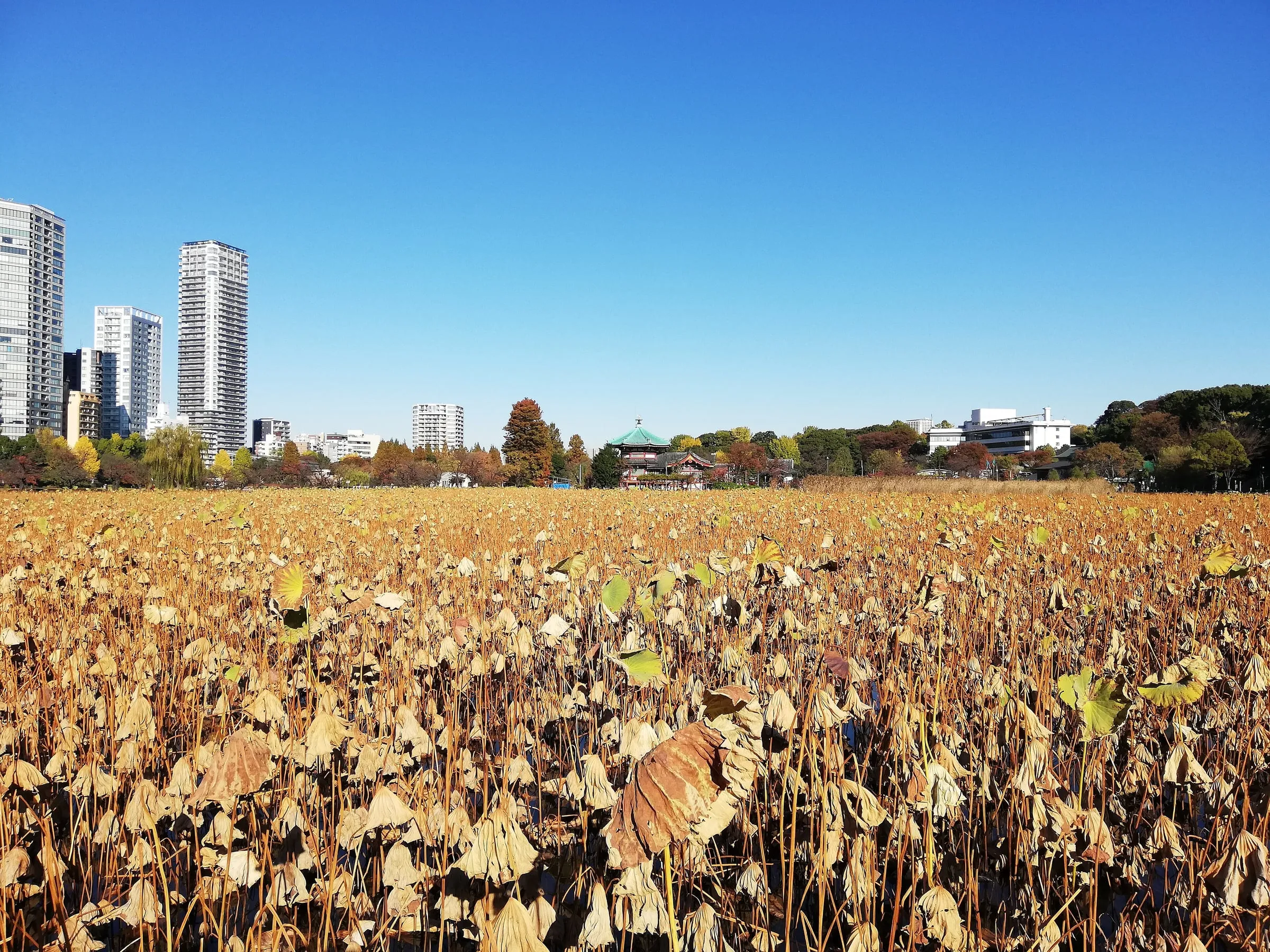
Shinobazu Pond’s lotus beds in November 2021, the leaves dried brown, with the octagonal Bentendo hall in the middle distance. Photo: 先従隗始 / Wikimedia Commons (CC0). Resized.
What should you see at Shinobazu Pond and Kiyomizu Kannon-do?
Start on the stage of Kiyomizu Kannon-do, look through its Moon Pine toward Bentendo, then walk down to the pond. The hall stands at the edge of the hill, and its stage once looked out over the lotus beds, the park notes. Tokyo’s plan for the park aims to restore that Edo-period view from the hall toward Bentendo and the water.
Kiyomizu Kannon-do was first built in 1631, modeled on Kyoto’s Kiyomizu-dera, and moved to its present spot in 1694 to make way for Kan’eiji’s main hall, according to a text published by the Japan Tourism Agency. Its main image, a seated Senju Kannon (the thousand-armed bodhisattva of compassion), is shown to the public on one day each February.
The Moon Pine is a pine whose branch is trained into a ring. Utagawa Hiroshige depicted the Edo-period tree in a woodblock print; the present pine was planted in 2012 to recreate it.
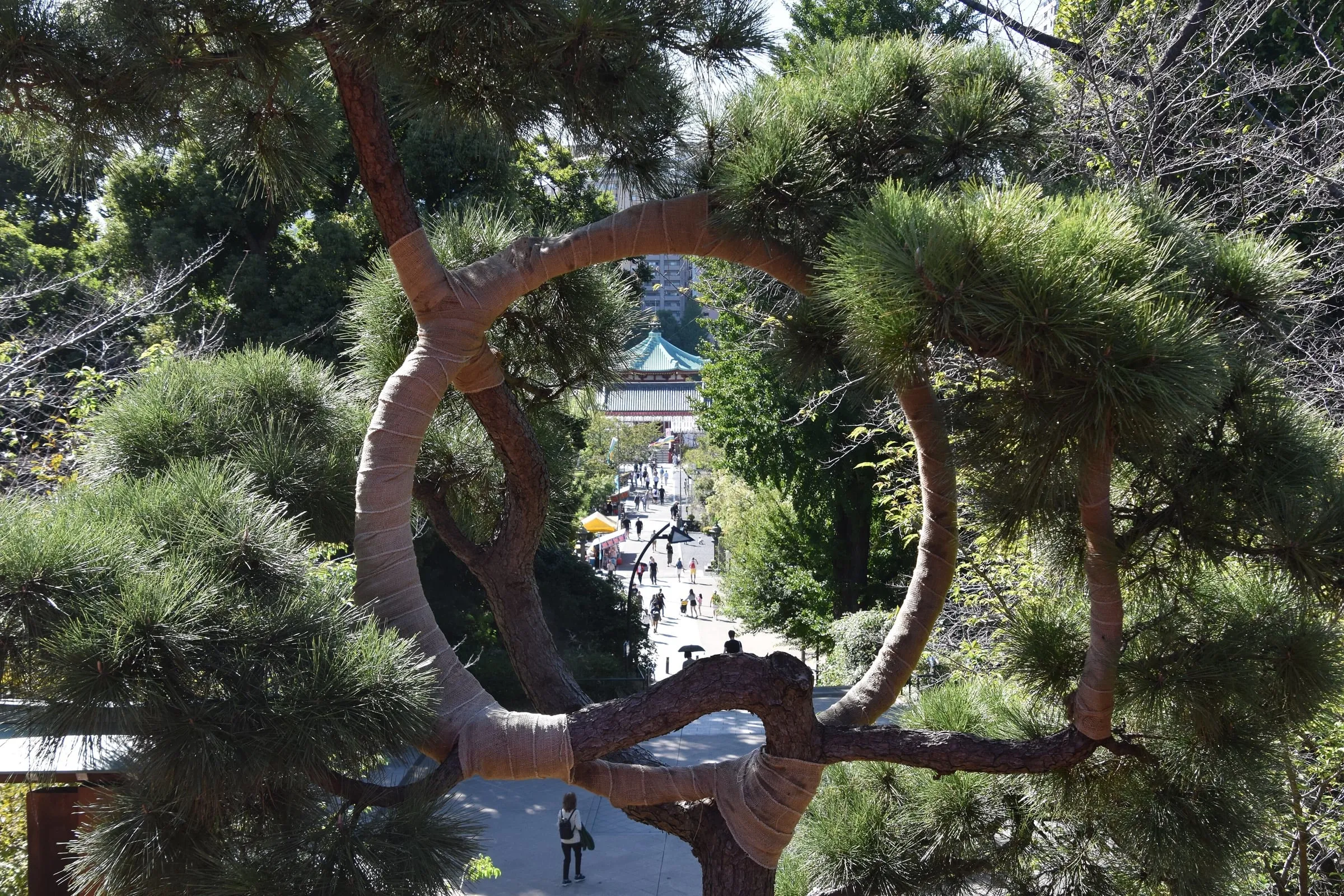
The Moon Pine in front of Kiyomizu Kannon-do, planted in 2012, with Bentendo seen through its loop, in October 2023. Photo: Fred Cherrygarden / Wikimedia Commons (CC BY-SA 4.0). Resized.
Below the hill, Bentendo, a hall for the goddess Benzaiten, stands out in the pond. The park says Tenkai, Kan’eiji’s founder, built the first hall; the present one was rebuilt in 1958 after the original was lost in the war. It has eight sides so that people can pray toward it from anywhere around the pond.
Boats cost ¥800 for 30 minutes in a rowboat, or ¥1,000 in a swan or pedal boat, according to the Tokyo Metropolitan Park Association. From November to February they run 9:30 a.m.–4:50 p.m., with the last rental at 3:50 p.m., and they stop on Wednesdays from December to February (checked Nov 11, 2026).
The pond has had other lives. On Nov 1, 1884, with Emperor Meiji present, it hosted its first horse race, according to the National Diet Library.
Which monuments tell Ueno Park’s story?
Five stops tell most of it: the Saigo Takamori statue, the Grant monument, the face of the Ueno Daibutsu, two buildings that survived 1868, and Kan’eiji itself. Start with Saigo Takamori, the bronze figure walking a dog near the park entrance, about a minute on foot from JR Ueno Station, according to Taito City’s tourism site. In 1868, as a staff officer of the army sent against the shogunate, Saigo met the shogunate’s Katsu Kaishu and secured the bloodless surrender of Edo Castle, the park says.
The statue, by the sculptor Takamura Koun, was dedicated at a ceremony on Dec 18, 1898. The figure is 370.1 centimeters (about 12 feet) tall, and the dog, Tsun, was sculpted by Goto Sadayuki.
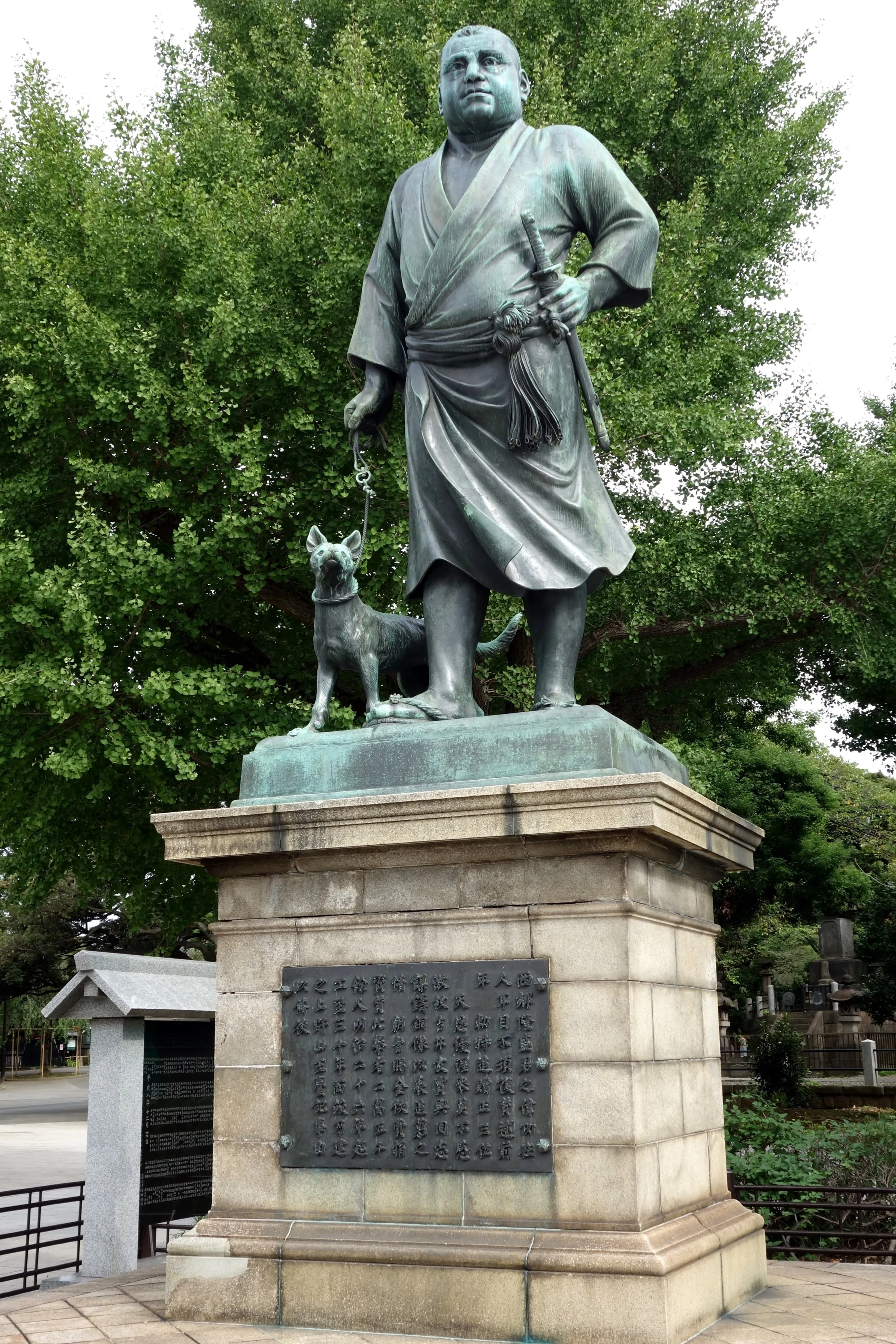
The statue of Saigo Takamori with the dog Tsun, dedicated in 1898, photographed in September 2013. Photo: Daderot / Wikimedia Commons (CC0). Resized.
American visitors may not expect the Grant monument. In 1879, after his presidency, Ulysses S. Grant was traveling around the world with his wife. At a welcome held here in the presence of Emperor Meiji, the couple planted trees: he a Lawson cypress, she a southern magnolia. Flowers are still offered at the stone every year, the park says.
On a rise called Daibutsuyama (Great Buddha Hill), only the face of the Ueno Daibutsu survives. Hori Naoyori donated the Buddha in 1631; after repeated earthquakes and fires, the face alone is preserved, and a pagoda was built in the hope of rebuilding the statue.
Two survivors of 1868 are still here. The five-story pagoda, rebuilt after a fire in 1639, now stands inside Ueno Zoo, and Ueno Toshogu, a shrine built in 1627, still stands on the hill.
Kan’eiji itself carries on at the park’s north side. Its main hall was built in 1638 for Kita-in, a temple in Kawagoe, then taken apart, carried down the river to Tokyo by boat and opened here in 1879, according to another Japan Tourism Agency text. The temple also keeps Aoi-no-ma, the room where the last shogun, Tokugawa Yoshinobu, confined himself at the end of the shogunate; it is normally closed to the public.
Does Ueno Zoo still have pandas?
No. Its giant pandas have gone back to China. The twins Xiao Xiao and Lei Lei had their last public viewing on Jan 25, 2026, and left Ueno on Jan 27, according to the Tokyo Metropolitan Government and the zoo. Their parents, Ri Ri and Shin Shin, returned to China on Sept 29, 2024, and the zoo notices we checked on Nov 11, 2026, announced no new pandas.
Ueno Zoo opened in 1882 as Japan’s first zoo, by its own account. It announced plans for more open days and longer hours in fiscal 2026, so check its site for the current timetable before you go. For the rest of the zoo, see our Ueno Zoo guide.
If you go
Leave JR Ueno Station by the Park Exit; the National Museum of Western Art is a minute away, the museum says. From Narita Airport, the Keisei Skyliner reaches Keisei Ueno Station in as little as 41 minutes, according to Keisei, and that station is a minute from the park. Sort out large bags before you start: the Tokyo National Museum no longer admits suitcases.
For a route, borrow the park’s own layout. Tokyo’s plan for Ueno Park describes three axes: from the JR Park Exit to the zoo’s main gate, from the Hakamagoshi plaza at the Shinobazu entrance to the Tokyo National Museum, and from Kiyomizu Kannon-do to Bentendo.
- Walk in from the Park Exit past the National Museum of Western Art.
- Turn toward the fountain and the Tokyo National Museum beyond it.
- Come back to Kiyomizu Kannon-do and look through the Moon Pine toward Bentendo.
- Walk down to the pond and Bentendo, then leave by the Hakamagoshi plaza, where a frog fountain, complete with a navel, serves as a meeting spot, the park says.
The grounds open at 5 a.m., hours before the museums. Keep museums off your Monday plans. On Fridays and Saturdays, the Tokyo National Museum and the National Museum of Western Art stay open until 8 p.m.
Kiyomizu Kannon-do, Bentendo and Kan’eiji are working places of worship. Keep your voice down near people praying, and leave the steps in front of the halls clear when you take photos.
Ueno Park is not in Asakusa, though both are in Taito City; the Ginza Line links Ueno and Asakusa for Senso-ji Temple. On foot, the walk from the park through the Ameya Yokocho (Ameyoko) market street to Akihabara is about 1.2 km, according to JNTO. From there, Kanda Myojin is seven minutes from JR Akihabara Station’s Electric Town exit, by the shrine’s count.
Bring it home: Hiroshige’s Moon Pine
You can set the old view beside the new one at home. The Cultural Japan database lists the Minneapolis Institute of Art’s impression of Hiroshige’s print “Moon Pine, Ueno”, dated 1857 and marked public domain. Open it next to the 2023 photo above and compare what each loop frames.
For more of old Ueno, the National Diet Library’s column on the park belongs to a series that pairs woodblock prints with old photographs. The text is in Japanese; the pictures need no translation.
More in Travel & Destinations
View all →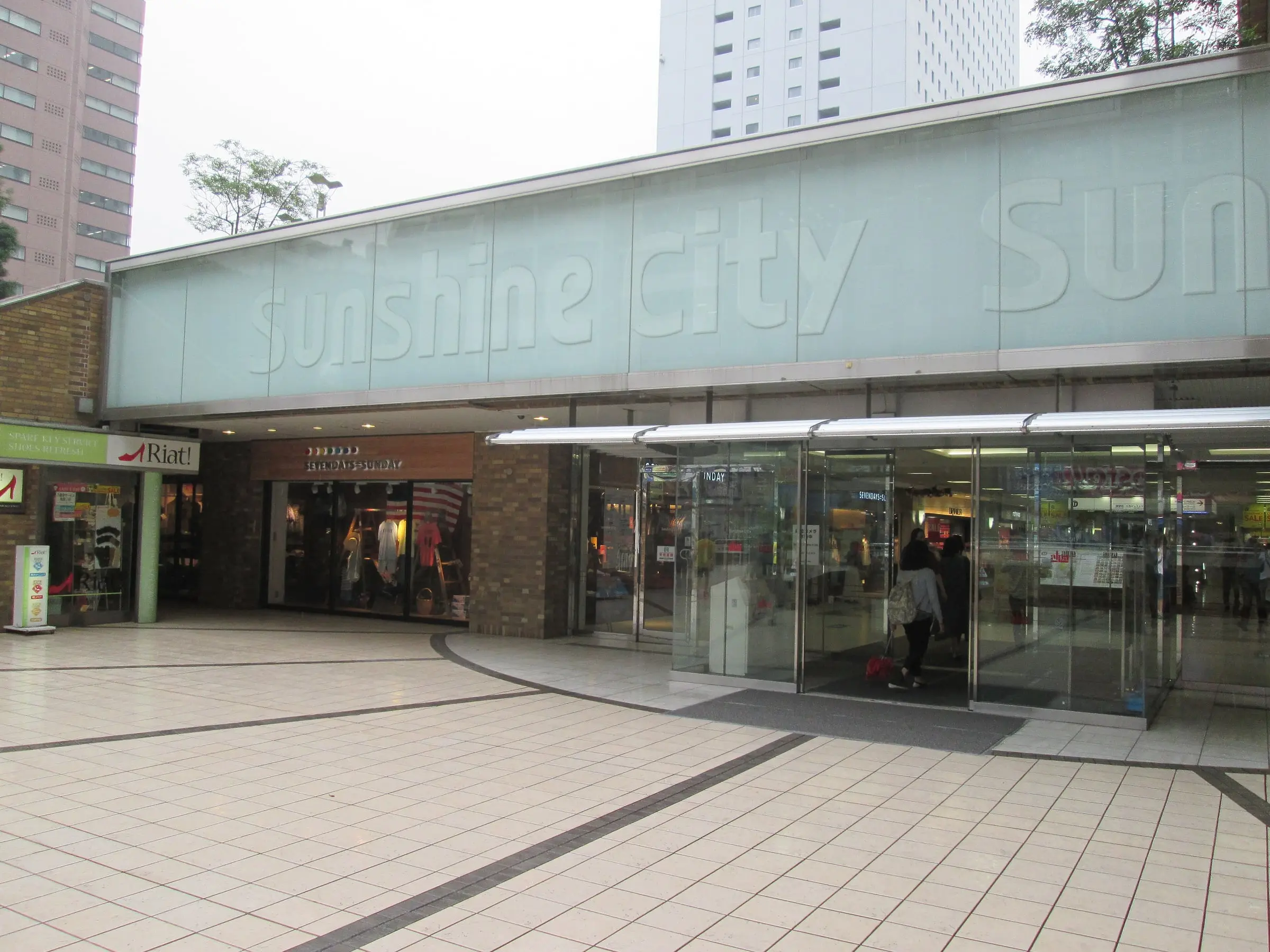
Sunshine City Ikebukuro: Aquarium, Observatory, and Tickets
Travel & Destinations · Tokyo
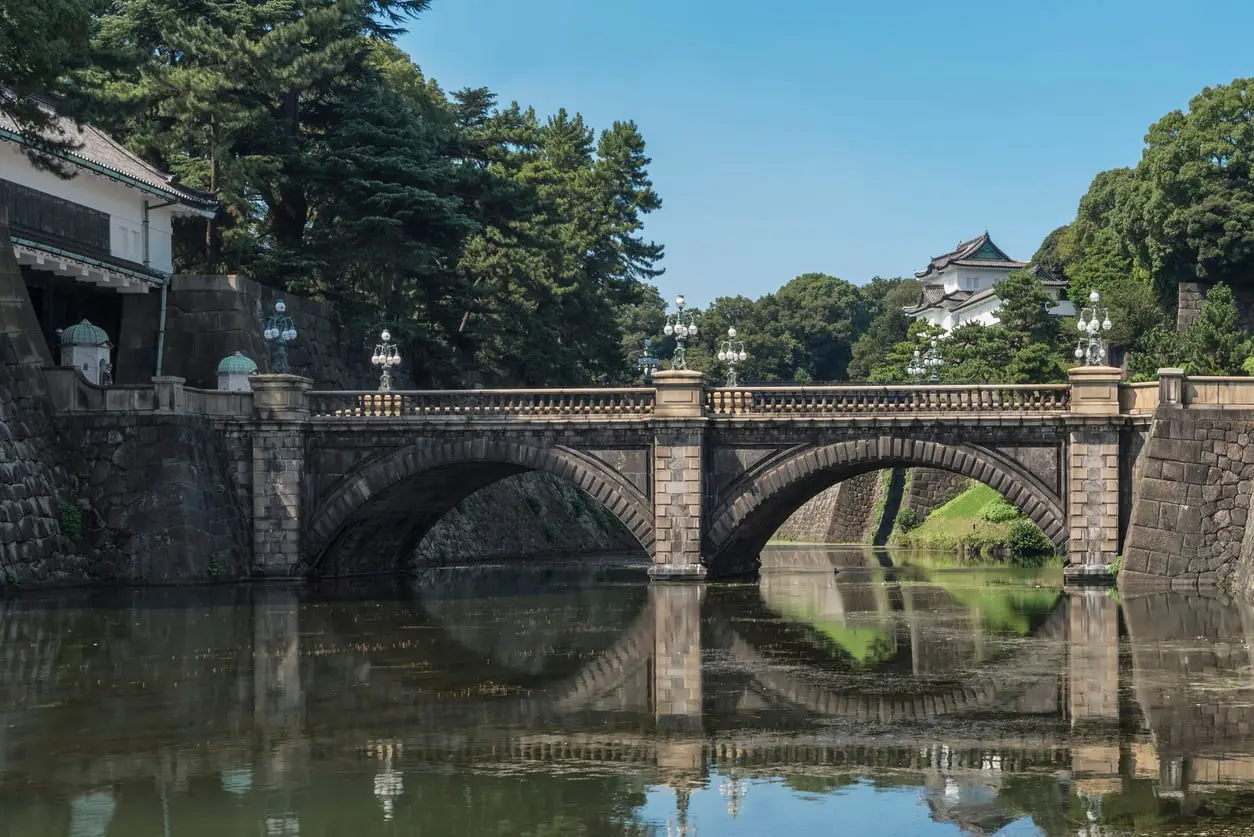
Imperial Palace Tokyo: Tours, East Gardens and Edo Castle
Travel & Destinations · Tokyo
Kabukiza Theatre: Single-Act Tickets, Captions and History
Travel & Destinations · Tokyo
Odaiba: Sea Forts, a Rainbow Bridge Walk and What Has Closed
Travel & Destinations · Tokyo
Related articles
Akihabara: How Tokyo's Electric Town Began, and When to Go
Travel & Destinations · Tokyo
Ebisu Garden Place: Brewery, Sky Lounge and Winter Lights
Travel & Destinations · Tokyo
Ginza, Tokyo: History, Landmarks, and Car-Free Weekends
Travel & Destinations · Tokyo


Hanayashiki Amusement Park: Rides, Tickets and 1853 Roots
Travel & Destinations · Tokyo