Tokyo Cruise Guide: Water Buses, Bay Dinners and Yakatabune
Which Tokyo cruise to take: water buses from Asakusa to Hama-rikyu and Odaiba, fares and times checked Nov 2026, and how bay dinners and yakatabune work.
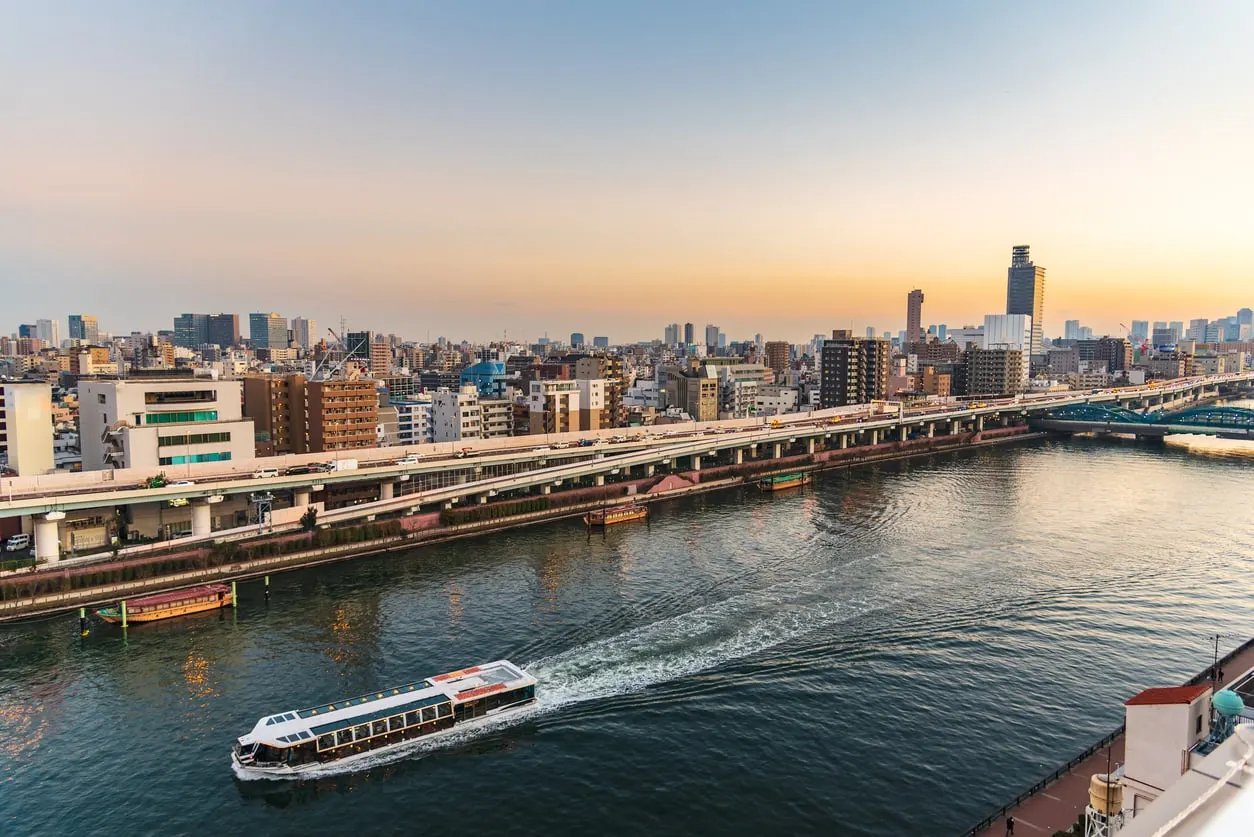
One stop on Tokyo’s river buses is inside a garden. Boats from Asakusa pull in at Hama-rikyu, once a seaside villa of the shoguns and now a public park, and the fare includes the garden’s admission. For now the landing works one way only: passengers can get off there, but nobody boards.
A Tokyo cruise usually means a water bus on the Sumida River and Tokyo Bay, a restaurant ship looping the bay, or a yakatabune, a pleasure boat with a tatami room where dinner is part of the trip. The water buses of Tokyo Cruise, the English name used by Tokyo Cruise Ship Co. (Tokyo-to Kanko Kisen), link Asakusa with Hama-rikyu Gardens, Hinode Pier, Odaiba Seaside Park and Toyosu. An adult ticket from Asakusa costs ¥1,000 to Hinode Pier, about 40 minutes downstream, or ¥2,000 on a direct boat to Odaiba, about an hour, and the company no longer takes cash.
At a glance
| Piers | Asakusa: 1 minute on foot from Asakusa Station (Ginza and Tobu lines), 3 from the Toei Asakusa Line. Hinode Pier: 2 minutes from Hinode Station (Yurikamome line), 8 from JR Hamamatsucho. Odaiba Seaside Park: 5 minutes from Daiba or Odaiba-kaihinkoen Station (Yurikamome). Toyosu: 5 minutes from Toyosu Station |
| Adult fares from Asakusa | Hinode Pier ¥1,000 (about 40 min). Hama-rikyu ¥1,180, garden admission included (about 35 min). Odaiba Seaside Park, direct, ¥2,000 (50–65 min). Toyosu ¥1,500 (30–35 min) |
| Boats from Asakusa | Direct to Odaiba: several a day from late morning, the last regular one at 4:10 p.m. Regular boats to Hinode Pier at 11:40 a.m., 2:20 p.m. and 3:55 p.m.; to Hama-rikyu at 11:40 a.m. and 2:20 p.m. (November–December 2026 timetable) |
| Children | Ages 6–11 pay a child fare, half the adult fare on most routes. One child aged 1–5 rides free with each adult |
| Paying and booking | Credit cards, electronic money and QR-code payments only; no cash since May 8, 2024. Online booking opens on the 1st of the previous month and closes 5 minutes before departure. Booked passengers board first |
| Days off | Himiko rests on the second Tuesday of the month and the day after, Hotaluna on the third, Emeraldas on the fourth (not in August); the timetable adds other days off. Weather and sea conditions can cancel any sailing |
| Official sites | Tokyo Cruise timetable and fares (Japanese) and English site; Tokyo Mizube Cruising Line (Japanese) |
Checked Nov 16, 2026, against Tokyo Cruise’s Japanese timetable, fare, pier and FAQ pages; times are from its November–December 2026 timetable. The English timetable lagged behind the Japanese one that day, so use the Japanese page for times.
Which Tokyo cruise should you choose?
Take a water bus to get somewhere, a restaurant ship for a meal with a view of the bay, and a yakatabune for a seated dinner on tatami. Water buses take online bookings until five minutes before departure; dinner boats are booked ahead.
Tokyo Cruise, founded in April 1885 according to its company profile, is the main water-bus operator in this guide. Its fleet comes in two styles. Ryoma, a red regular boat named after a historical figure connected with the sea and Tokyo, takes about 300 passengers. The three boats that look like spacecraft, Himiko, Hotaluna and Emeraldas, take 80 to 120 each and were designed by the manga artist Leiji Matsumoto. Himiko, the first, was conceived around the shape of a teardrop, and its onboard announcements come from Tetsuro Hoshino, Maetel and the Conductor, characters from his Galaxy Express 999.
The design costs extra on some routes: from Asakusa to Hinode Pier, Hotaluna charges ¥1,400 against ¥1,000 on a regular boat, and all three charge ¥2,000 to Odaiba. The company’s routes from Hinode Pier to Palette Town and Tokyo Big Sight are suspended for the time being (checked Nov 16, 2026).
How does the water bus from Asakusa work?
Book online or buy at the pier, and board at the Asakusa landing, 1-1-1 Hanakawado in Taito City. Tokyo Cruise takes no cash and cannot top up a card at the pier, so add credit to your transit card or payment app before you arrive. Online bookings are paid by credit card or WeChat Pay; the Hama-rikyu boat, covered in the next section, cannot be booked.
Tokyo Cruise’s timetable for November and December 2026 offers four kinds of trip from Asakusa:
- Odaiba Seaside Park, direct. Himiko, Hotaluna or Emeraldas, ¥2,000, 50 to 65 minutes depending on the boat. The timetable lists seven regular departures in November and five in December, the last at 4:10 p.m.; an extra boat adds a 10 a.m. sailing on weekends and holidays.
- Hinode Pier. Regular boats at 11:40 a.m., 2:20 p.m. and 3:55 p.m., ¥1,000, about 40 minutes.
- Toyosu. A 41-passenger boat from Urban Launch, a separate operator whose boats appear on Tokyo Cruise’s timetable, runs nonstop in the afternoon, the last at 5:25 p.m.; ¥1,500, 30 to 35 minutes. Tokyo Cruise notes that Himiko does not call at Toyosu at present.
- Round trips. Urban Launch also loops from Asakusa: a 50-minute bridge tour for ¥2,500 and a 30-minute Skytree tour for ¥1,500, ten departures a day between 10:50 a.m. and 4:30 p.m., according to its website. Its boats rest on the second Wednesday of most months.
Food and drink brought aboard are not allowed on Himiko, Hotaluna and Emeraldas, except what you buy at the company’s own café at the Asakusa and Hinode piers; the other boats allow them.
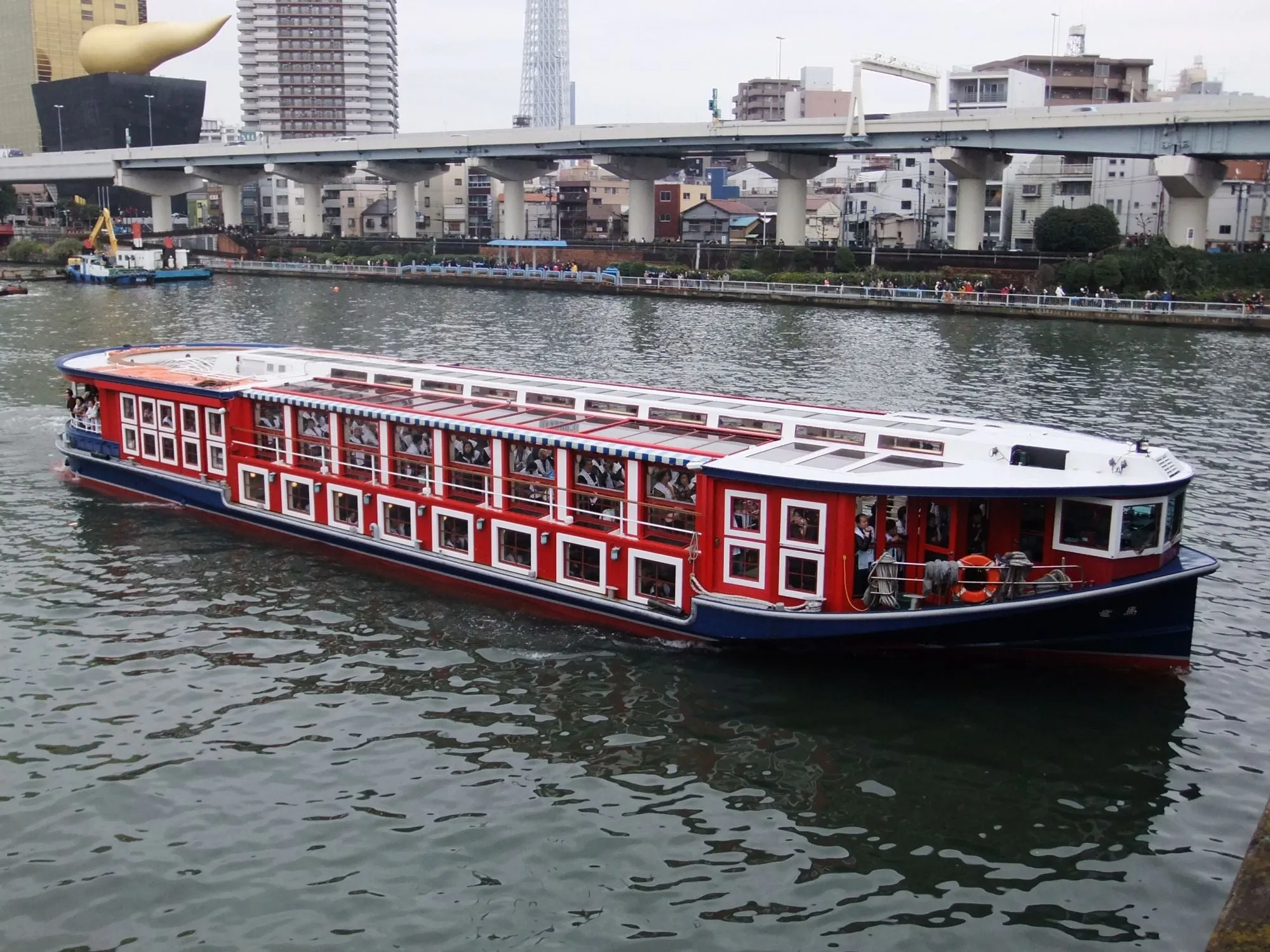
The regular water bus Ryoma on the Sumida River at Asakusa in March 2012, with Tokyo Skytree behind. Photo: Tak1701d / Wikimedia Commons (public domain).
Can you get off at Hama-rikyu Gardens?
Yes, if you board at Asakusa. Tokyo Cruise lists Hama-rikyu as a get-off-only stop and says nobody can board there at present.
In the November and December 2026 timetable, boats leave Asakusa for Hama-rikyu at 11:40 a.m. and 2:20 p.m. (with a few days off, and none Dec 29–31) and take about 35 minutes. Tickets are sold only from the ticket machines at the Asakusa pier, not online; the company stopped taking reservations for this stop after October 2024. A ticket to Hinode Pier will not let you off at the garden.
The adult fare, ¥1,180 (children ¥470), includes the garden’s admission, Tokyo Cruise says; the landing itself is inside the garden. Visitors who walk in pay ¥300 (¥150 for those 65 and over, free for children of elementary school age and younger), according to the garden’s page on the Tokyo Metropolitan Park Association’s site. It is open 9 a.m.–5 p.m. (last entry 4:30 p.m.) and closed Dec 29–Jan 1. Garden rules apply as soon as you step off: bicycles cannot come ashore, and pets are barred under the Cultural Properties Protection Act, Tokyo Cruise’s FAQ notes.
The reason to stop is the water. Hama-rikyu’s pond is a shioiri no ike, a tidal pond: the garden opens and closes sluice gates as the level of Tokyo Bay rises and falls, so the pond changes with the tide. Kyu-Shiba-rikyu, Kiyosumi and Kyu-Yasuda gardens once had tidal ponds too, the park association says, but Hama-rikyu is now the only one where seawater still flows in and out.
The land was a reed-covered falconry ground of the shoguns until the Kan’ei era (1624–1644). In 1654 Matsudaira Tsunashige, a younger brother of the fourth shogun, received permission to reclaim land here for a residence. After his son became the sixth shogun, Ienobu, it became a shogunal villa called Hama Goten, and it took roughly its present form under the 11th shogun, Ienari. After the Meiji Restoration it became an imperial detached palace, Hama Rikyu; the Tokyo government received it on Nov 3, 1945, and opened it to the public in April 1946. Since November 1952 it has been a Special Place of Scenic Beauty and Special Historic Site, together with the water around it.
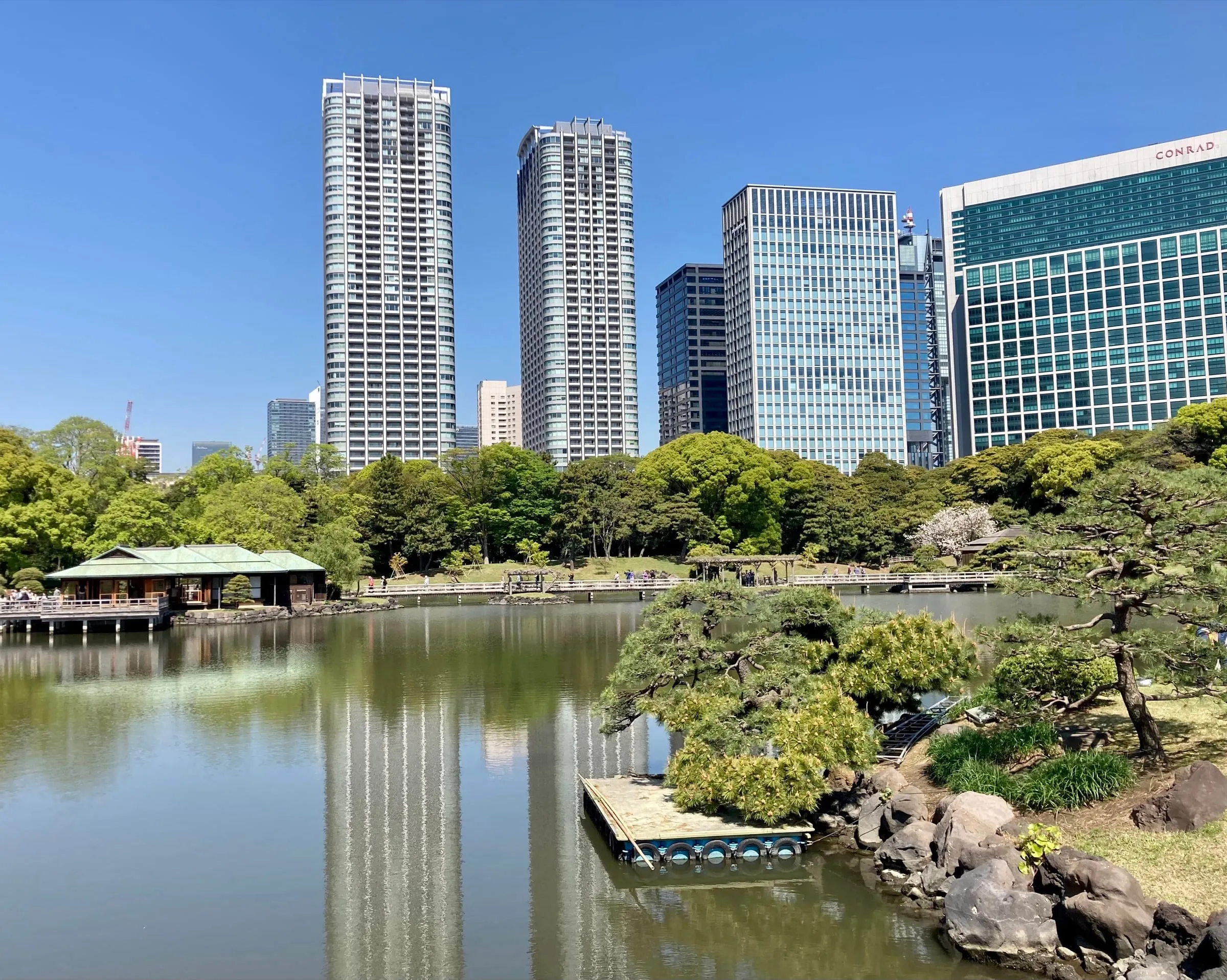
Hama-rikyu Gardens in April 2023: a teahouse on the pond, with the Shiodome towers behind. Photo: Dudva / Wikimedia Commons (CC BY-SA 4.0). Resized.
What will you see from a Sumida River cruise?
Mostly bridges. Tokyo Cruise and GO TOKYO both count 13 over the Sumida on the way down from Asakusa, and the commentary on board introduces several by their colors and shapes, among them Azuma Bridge and Kiyosu Bridge.
Three of them were designated Important Cultural Properties in June 2007 for their place in the history of Japanese bridge engineering, according to Chuo City. Kiyosu Bridge (1928) and Eitai Bridge stand for the rebuilding after the Great Kanto Earthquake, and Kachidoki Bridge (1940) used the most advanced technology of its day.
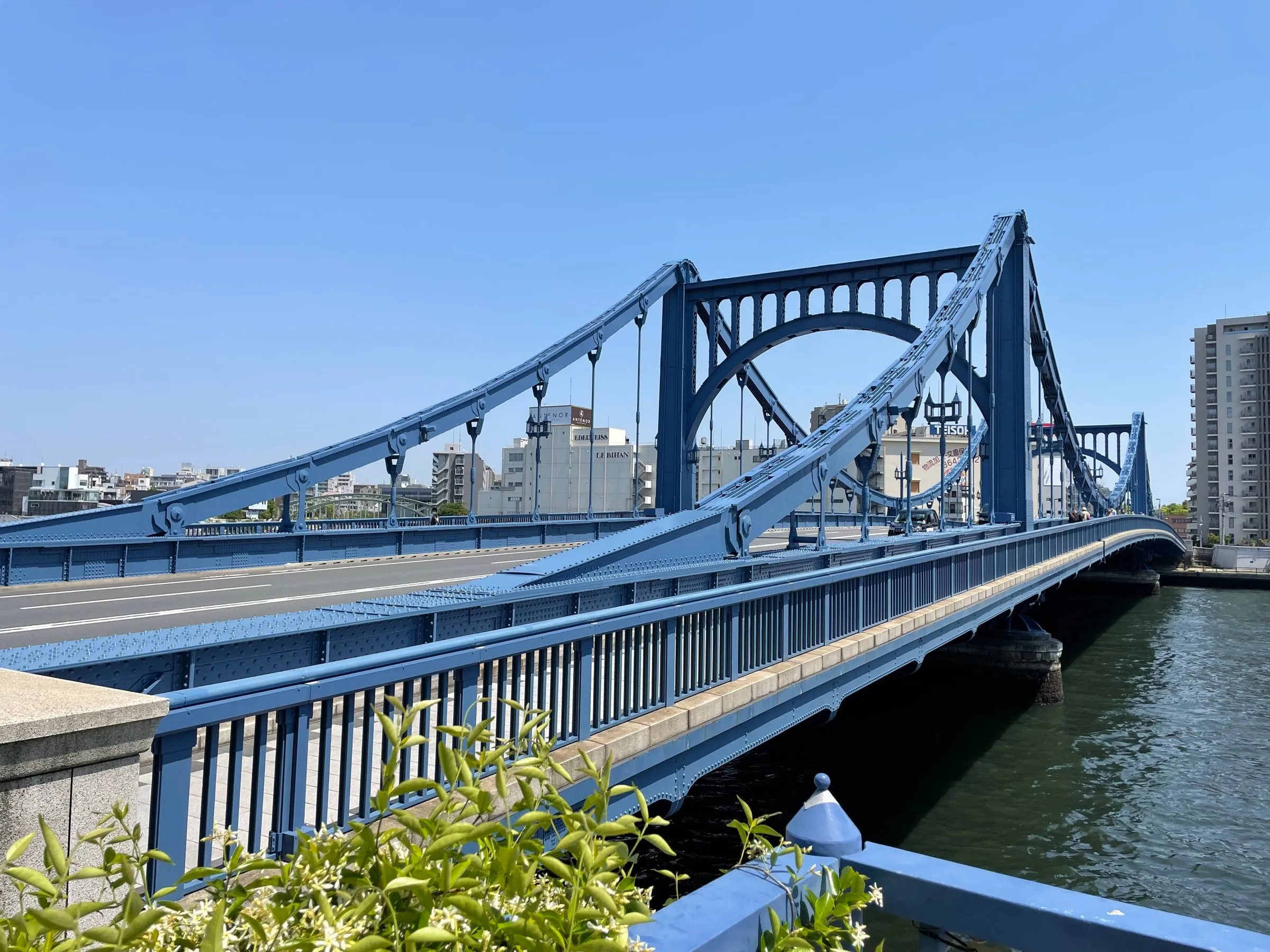
Kiyosu Bridge over the Sumida River in May 2022, one of three Sumida bridges designated Important Cultural Properties in 2007. Photo: Higa4 / Wikimedia Commons (CC0). Resized.
Eitai Bridge has the longest history of the three. The first, a wooden bridge, went up in 1698 according to the shogunate’s official chronicle (another account says 1696), about 100 meters upstream of today’s crossing. The present steel bridge, finished in December 1926, was the first of the earthquake-reconstruction bridges completed on the Sumida, Chuo City says.
Kachidoki Bridge is a bascule bridge, built to lift for ships. Chuo City describes it as the largest bascule bridge in Japan, and it has not opened since 1970.
Near Asakusa, Tokyo Skytree rises across the river in Sumida City; our Tokyo Skytree guide covers the tower. Boats bound for Odaiba then pass under the Rainbow Bridge, as both water-bus operators describe their routes.
For open air, check the boat. Hotaluna opens its roof deck only between Hinode Pier and Odaiba, Tokyo Cruise says, and GO TOKYO notes that Emeraldas’s roof becomes a promenade deck once it leaves the Sumida. Any roof deck may close for weather, or for the tide level on routes that pass under bridges, the company adds.
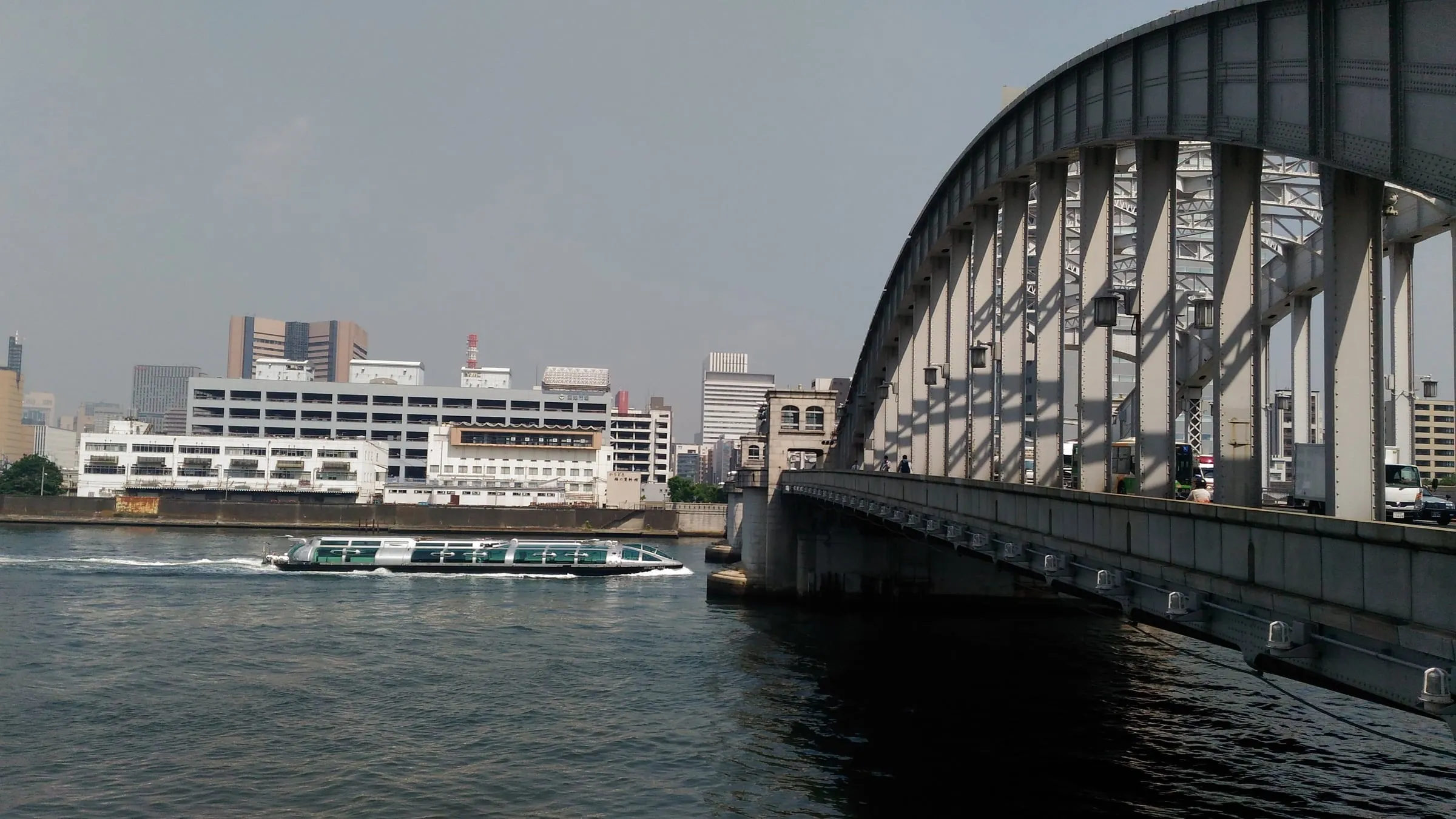
One of Kachidoki Bridge’s steel arches over the Sumida River, with a passenger boat on the water, in May 2017. Photo: R96340 / Wikimedia Commons (CC BY-SA 4.0). Resized.
Is there another boat from Asakusa to Odaiba?
Yes. The Tokyo Mizube Cruising Line, run by the Tokyo Metropolitan Park Association, returned on Oct 17, 2026, after a pause that began in January 2026. It sails mainly on Raiden, one of two disaster-response boats the Tokyo Metropolitan Government built to survey rivers and carry supplies and people in an earthquake or other disaster; running the water bus is one of their peacetime jobs, the association says.
The Asakusa and Odaiba cruise leaves the Asakusa Nitenmon landing (spelled Nitemmon in the line’s English leaflet), six minutes on foot from the Nitenmon gate of Senso-ji, and calls at Ryogoku River Center, three minutes from the West Exit of JR Ryogoku Station. The association’s leaflet for October to December 2026 lists three sailings a day: from Asakusa at 10:40 a.m., 1:20 p.m. and 4 p.m., about 10 minutes to Ryogoku and 45 more to Odaiba Seaside Park, and back from Odaiba at noon, 2:40 p.m. and 5:20 p.m., about 65 minutes to Asakusa via Ryogoku.
Adults pay ¥2,000 to Odaiba from Asakusa or Ryogoku and ¥600 between Asakusa and Ryogoku; children pay half, and one preschooler rides free with each adult. The line sails Wednesday to Sunday as a rule, with exceptions on its schedule page; in December 2026 it skips Wednesdays and Dec 31. Ticket sales close five minutes before departure, the ticket office at Odaiba Seaside Park takes no cash, and wheelchair users are asked to contact the line in advance.
How do Tokyo Bay dinner cruises and yakatabune work?
Both are meals on the water, booked ahead with the operator: GO TOKYO says dinner cruises tend to be popular and need to be reserved in advance.
The Symphony restaurant ships, run by Sealine Tokyo, board at the company’s Hinode Pier office, a minute’s walk from Hinode Station, and ask passengers to check in 30 minutes before departure. The company runs lunch, afternoon, sunset and dinner cruises on two ships, Moderna and Classica, according to its website. GO TOKYO describes the dinner cruise as passing under the Tokyo Gate Bridge and making one loop of Tokyo Bay.
GO TOKYO’s Japanese directory of Tokyo boat operators describes yakatabune meals eaten in an ozashiki, a tatami room, while the seasonal scenery passes outside, on courses that range from sightseeing loops to cherry blossom trips, cool summer evenings and fireworks nights. It calls the custom a stylish form of boating that flourished in the Edo period. The directory lists 45 yakatabune businesses, 34 of them members of the Tokyo yakatabune cooperative (Yakatabune Tokyo-to Kyodo Kumiai), and sends readers to each company’s own site for details.
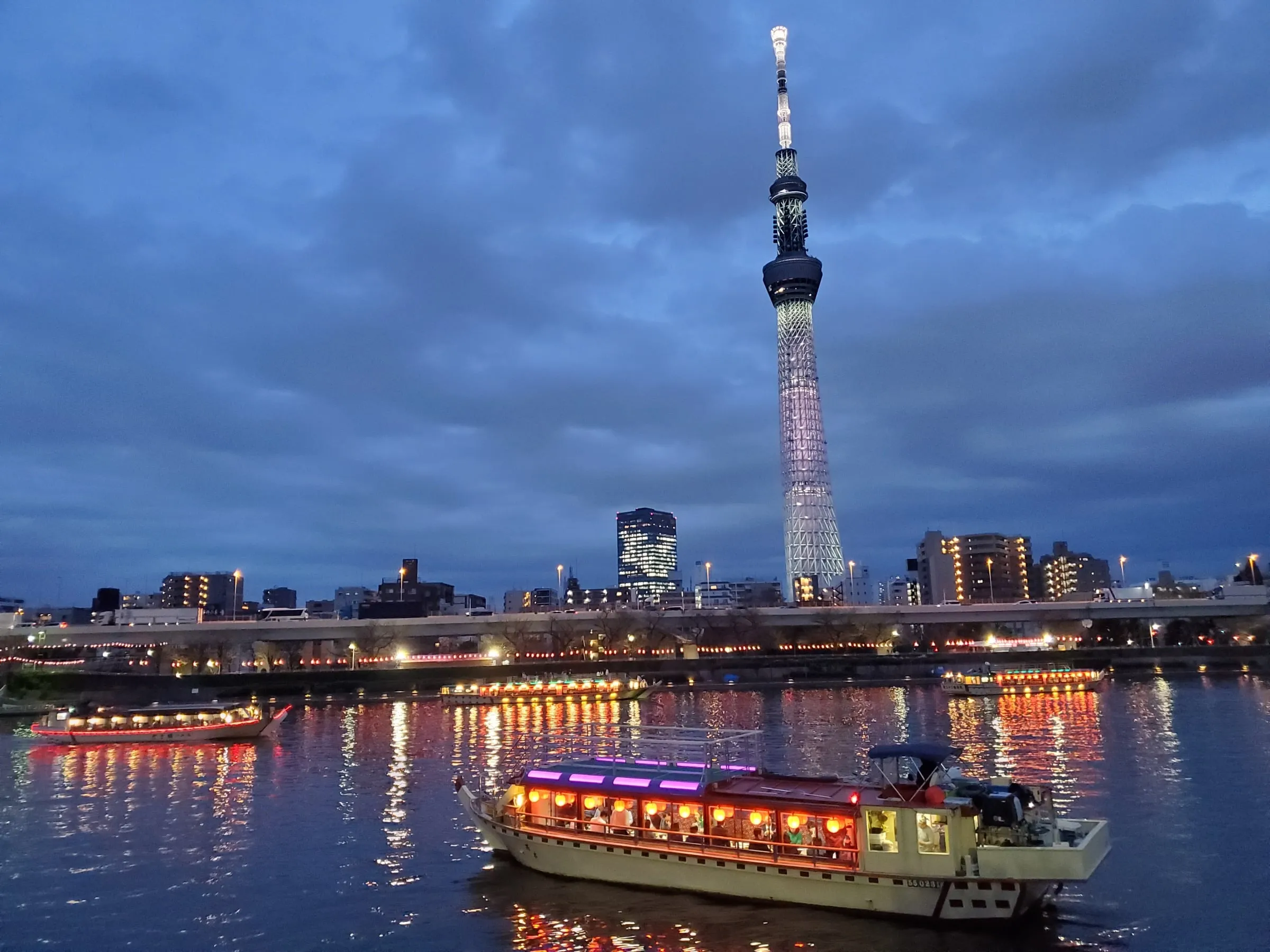
Yakatabune with their lights on, on the Sumida River just below Sakurabashi Bridge at dusk in March 2024, with Tokyo Skytree behind. Photo: Nurg / Wikimedia Commons (CC BY-SA 4.0). Resized.
For a night on the water without dinner, Tokyo Cruise adds Saturday evening sailings from Asakusa in December 2026 (Dec 5, 12, 19 and 26) at 6 p.m. and 6:10 p.m., timed to reach Odaiba for the Odaiba Rainbow Fireworks, about five minutes from 7 p.m. Adults pay ¥4,000 for the 60- to 70-minute trip. The fireworks can be canceled in bad weather, and if the boat sails anyway the company does not refund the fare (checked Nov 16, 2026).
If you go
Two half-day plans fit the November and December 2026 timetables.
The garden route. Start the morning at Senso-ji, which our Senso-ji guide covers, then walk to the Asakusa pier. Buy a Hama-rikyu ticket at the machines for the 11:40 a.m. boat and spend the afternoon in the garden. Leave by the Otemon gate, 7 minutes from Tsukijishijo and Shiodome stations on the Toei Oedo Line, or by the Nakanogomon gate, 5 minutes from Shiodome (Exit 10), the park association says. The Tsukiji Outer Market is a minute from Tsukijishijo’s Exit A1.
The bay route. Take a direct boat from Asakusa to Odaiba Seaside Park, then walk 5 minutes to Daiba or Odaiba-kaihinkoen Station; our Odaiba guide covers the island. Boats back to Asakusa end early. In the November and December 2026 timetables, Tokyo Cruise’s last regular direct boat from Odaiba leaves at 3:10 p.m. (extra boats run later on some days) and the Mizube Line’s at 5:20 p.m.; after that, take the train.
Before you leave, check Tokyo Cruise’s daily operating status. The company cancels sailings when weather or sea conditions could endanger the boat, and also stops for safety drills and legally required maintenance.
Toyosu by boat means a shopping center, not the fish market: the landing is in the ground-floor courtyard of Urban Dock LaLaport Toyosu, five minutes from Toyosu Station. No staff wait on shore, so stand near the entrance until the crew comes, and do not confuse it with the nearby Toyosu Market landing. The market is at Shijo-mae Station on the Yurikamome, and our Toyosu Market guide lists its closed days: Sundays, most national holidays and most Wednesdays.
FAQ
Can you bring a stroller or a wheelchair? Strollers can go aboard Tokyo Cruise boats unfolded, though staff may ask you to fold one on a crowded boat. Wheelchairs can usually roll straight on, but the river is tidal: on some spring-tide days at the lowest tide, the gangway can tilt past the permitted angle and boarding may not be possible, the company says.
Can you bring a pet? Yes, in a carrier that holds the whole animal, Tokyo Cruise says. Urban Launch charges ¥500 extra for a pet.
Where do ocean cruise ships dock in Tokyo? Not at the water-bus piers. The Tokyo Metropolitan Government opened the Tokyo International Cruise Terminal on Sept 10, 2020, as a new gateway able to take the world’s largest passenger ships, and the Yurikamome has a stop named for it, Tokyo International Cruise Terminal Station.
If the garden is the point, plan the way back before you sail: at Hama-rikyu the boat only lets you off, and the return trip begins at the garden gate.
More in Travel & Destinations
View all →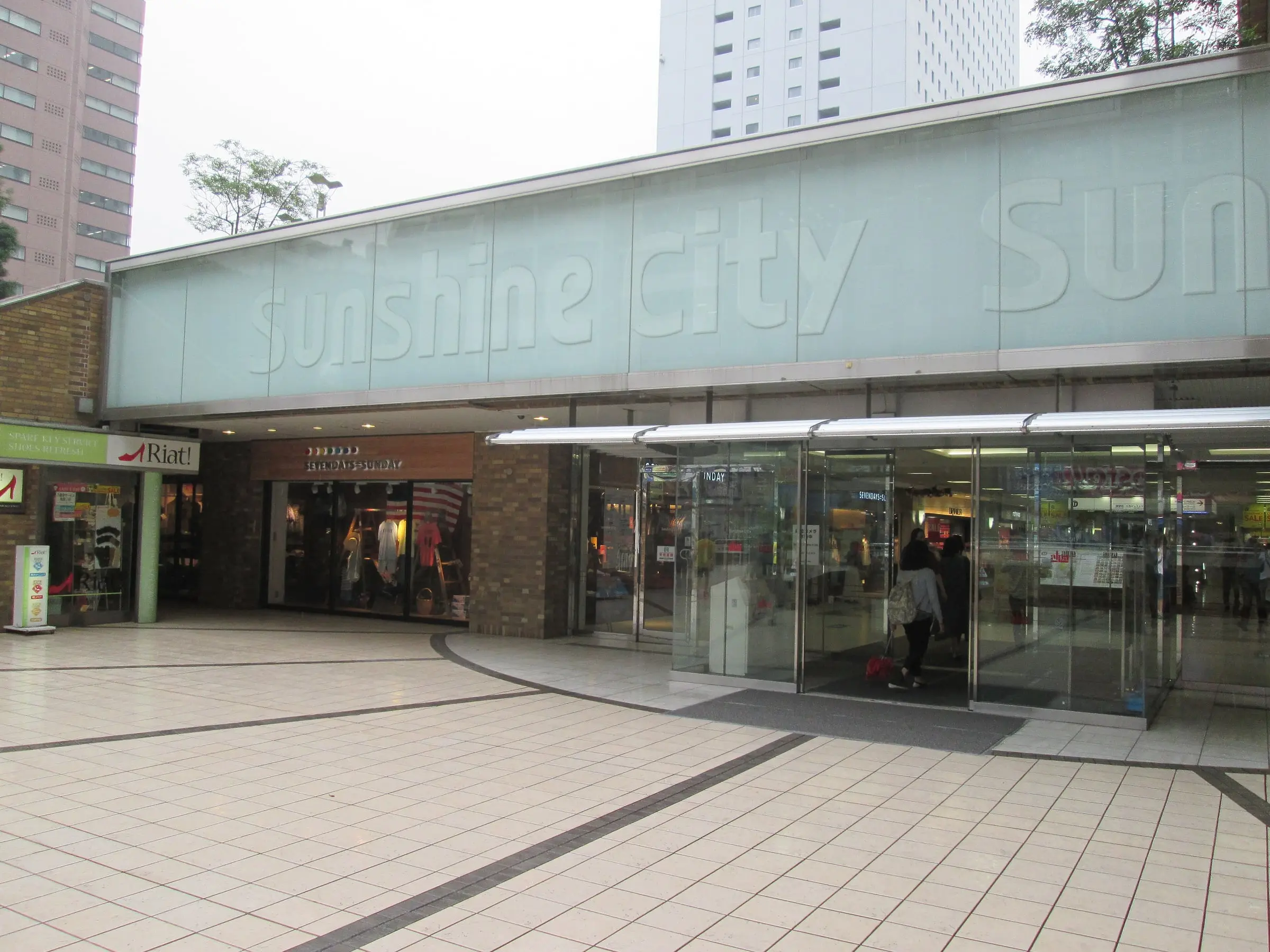
Sunshine City Ikebukuro: Aquarium, Observatory, and Tickets
Travel & Destinations · Tokyo
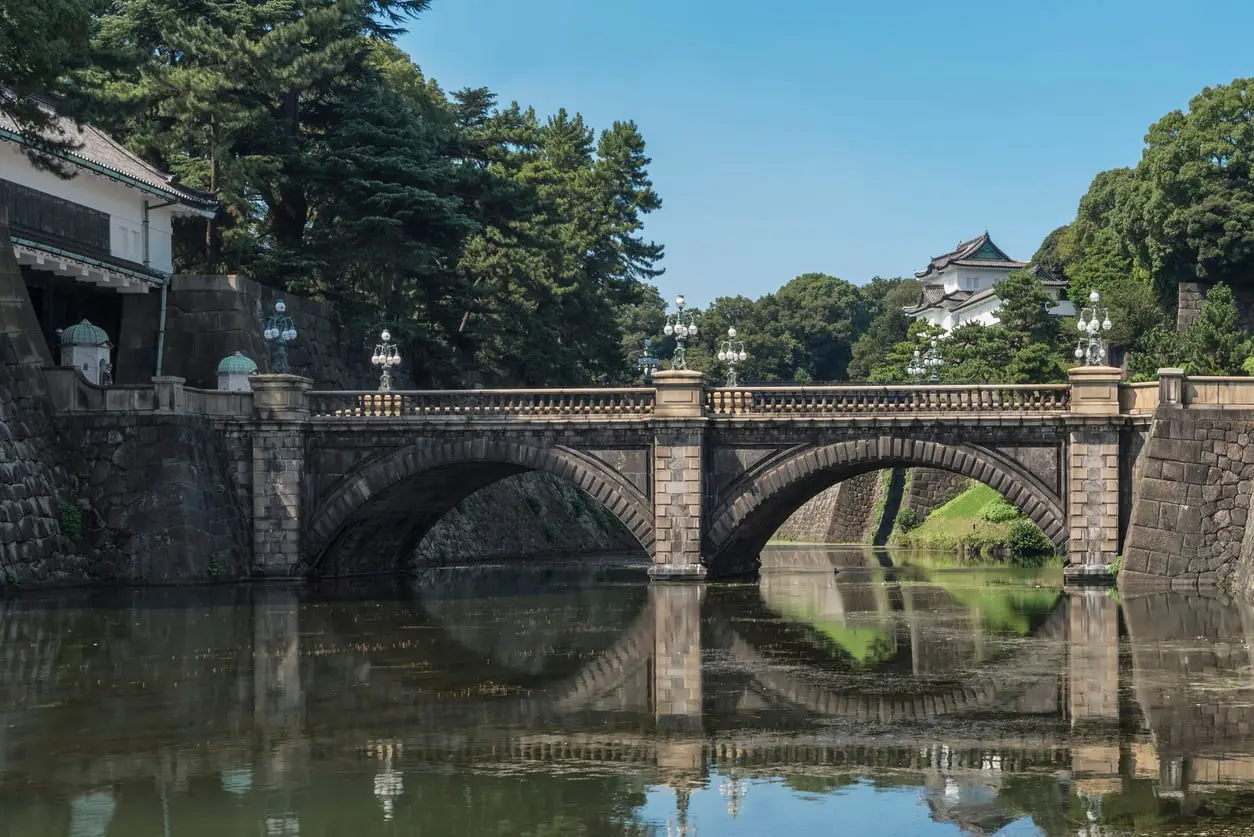
Imperial Palace Tokyo: Tours, East Gardens and Edo Castle
Travel & Destinations · Tokyo
Kabukiza Theatre: Single-Act Tickets, Captions and History
Travel & Destinations · Tokyo
Odaiba: Sea Forts, a Rainbow Bridge Walk and What Has Closed
Travel & Destinations · Tokyo
Related articles
Akihabara: How Tokyo's Electric Town Began, and When to Go
Travel & Destinations · Tokyo
Ebisu Garden Place: Brewery, Sky Lounge and Winter Lights
Travel & Destinations · Tokyo
Ginza, Tokyo: History, Landmarks, and Car-Free Weekends
Travel & Destinations · Tokyo


Hanayashiki Amusement Park: Rides, Tickets and 1853 Roots
Travel & Destinations · Tokyo