Toyosu Market: Tuna Auction Lottery, Hours and Closed Days
How Toyosu Market replaced Tsukiji, how to watch the tuna auction free from the walkway or win a deck place by lottery, and which days it closes.
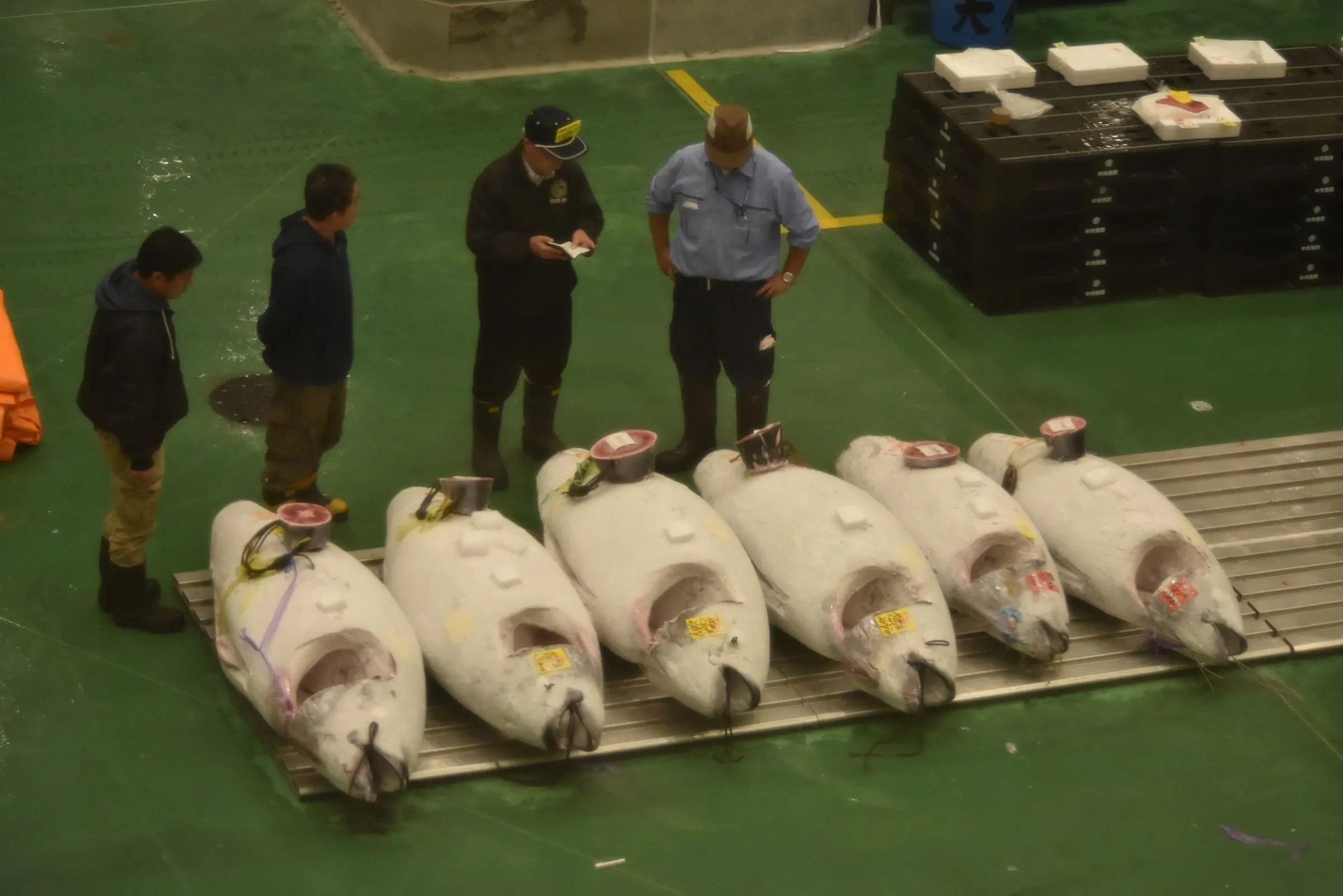
At the year’s first auction on Jan 5, 2026, a 243-kilogram bluefin tuna from Oma, in Aomori Prefecture, sold at Toyosu Market for ¥510.3 million before tax. That came to ¥2.1 million a kilo, according to the market’s published results. On an ordinary market day, anyone can watch the tuna bidding from a second-floor walkway from 5 a.m., free and without booking.
Toyosu Market, often called the Toyosu fish market, is a wholesale market for seafood, fruit and vegetables in Toyosu, Koto City. The Tokyo Metropolitan Government runs it and calls it the core market of the Tokyo region. It opened on Oct 11, 2018, taking over from the wholesale market at Tsukiji, and GO TOKYO, the city’s official travel guide, calls it one of the world’s largest seafood markets. Visitors walk in free from 5 a.m. to 5 p.m. on market days, which exclude Sundays, most national holidays and most Wednesdays, and Shijo-mae Station on the Yurikamome line is four minutes away on foot.
At a glance
| Where | 6-6-1 Toyosu, Koto City. 4 minutes on foot from Shijo-mae Station (Yurikamome line, U14), along the pedestrian deck from the ticket gates |
| Visitor hours | Visitor corridors, including the restaurant and shop areas, 5 a.m.–5 p.m. on market days; shops keep their own hours. PR Corner 8:30 a.m.–2:30 p.m. (Saturdays to 11:30 a.m.). Rooftop garden 5 a.m.–11 p.m., market holidays included |
| Closed | Sundays, most national holidays and most Wednesdays (45 of 52 in 2026). New Year: Dec 31, 2026–Jan 4, 2027 |
| Cost | Free, including the tuna auction deck |
| Tuna auction | Second-floor walkway from 5 a.m. on market days, no booking, no cap on numbers. Observation deck 5:45–6:25 a.m., by monthly lottery, 100 people a day |
| Rules | No eating or drinking in the corridors or on their benches; no flash on the deck; the intermediate wholesale floor sells to the trade only; no visitor parking, not even for bicycles |
| Official site | Tokyo Metropolitan Central Wholesale Market, in Japanese: visitor hours, tuna auction lottery, market calendar |
Checked Nov 14, 2026, against the Tokyo Metropolitan Central Wholesale Market’s Japanese pages (visitor hours, the December 2026 tuna lottery notice and its FAQ, the 2026 and 2027 calendars, the access sheet) and GO TOKYO.
How can you watch the tuna auction at Toyosu Market?
There are two ways, and both are free: from the second-floor visitor walkway, with no booking, or from the tuna auction observation deck, which only lottery winners can use.
The walkway opens at 5 a.m. on every market day, and the market’s FAQ says there is no limit on how many people can come in. The deck, in the market’s words, lets visitors watch the bidding up close; its sessions run from 5:45 to 6:25 a.m. Deck winners who miss the 5:30 a.m. meeting time are asked to watch from the walkway instead.
The bidding takes place in the Fisheries Wholesale Market Building, in Block 7, where seafood from Japan and abroad is gathered and traded. The market’s facility overview lists a tuna auction room and a wholesale floor just for sea urchin on its second floor, and chilled selling floors and a live-fish floor on the first.
How does the Toyosu tuna auction lottery work?
You apply online once a month, during a weeklong window in the month before, and the market draws 100 people for each viewing day. Its notice stresses that places go by lottery, not first come, first served.
The market’s schedule for the fiscal year ending in March 2027 opens each window at 3 p.m. Japan time, usually on the first Wednesday of the month, and keeps it open for a week; results arrive by email about nine days after it closes. When we checked on Nov 14, 2026, the windows still to come were Dec 2–8 (for January 2027, with results on Dec 17), Jan 6–12, Feb 3–9 and Mar 3–9. Entries go through the lottery site linked from the market’s tuna auction page.
In December 2026, viewings run on every market day from Dec 1 to Dec 24. The market takes no deck applications for Dec 25 to Jan 5, a span that included the first auction of 2026.
The rules, from the market’s December 2026 notice and its FAQ:
- One entry per group of up to five people, babies included. The lead applicant must be of junior high school age or older.
- List up to three preferred dates. There is no second round, no same-day entry and no waiting list.
- Groups of six or more must split into separate groups, each with its own email address, and may not all win.
- Apply yourself: the market says entries should come directly from the people taking part, not from tour companies or event organizers.
- Dates cannot be changed after the deadline, and reselling or handing over a place is banned.
On the day, the group meets at 5:30 a.m. at the PR Corner, on the third floor of the Management Facilities Building in Block 7, five minutes on foot from Shijo-mae Station. Bring the winning email, and photo ID such as a passport for every member of the group; children of elementary school age or younger without photo ID may show a health insurance card.
Groups take turns on the deck. Photos are allowed and flash is not, and staff turn away anyone they judge to be drunk.
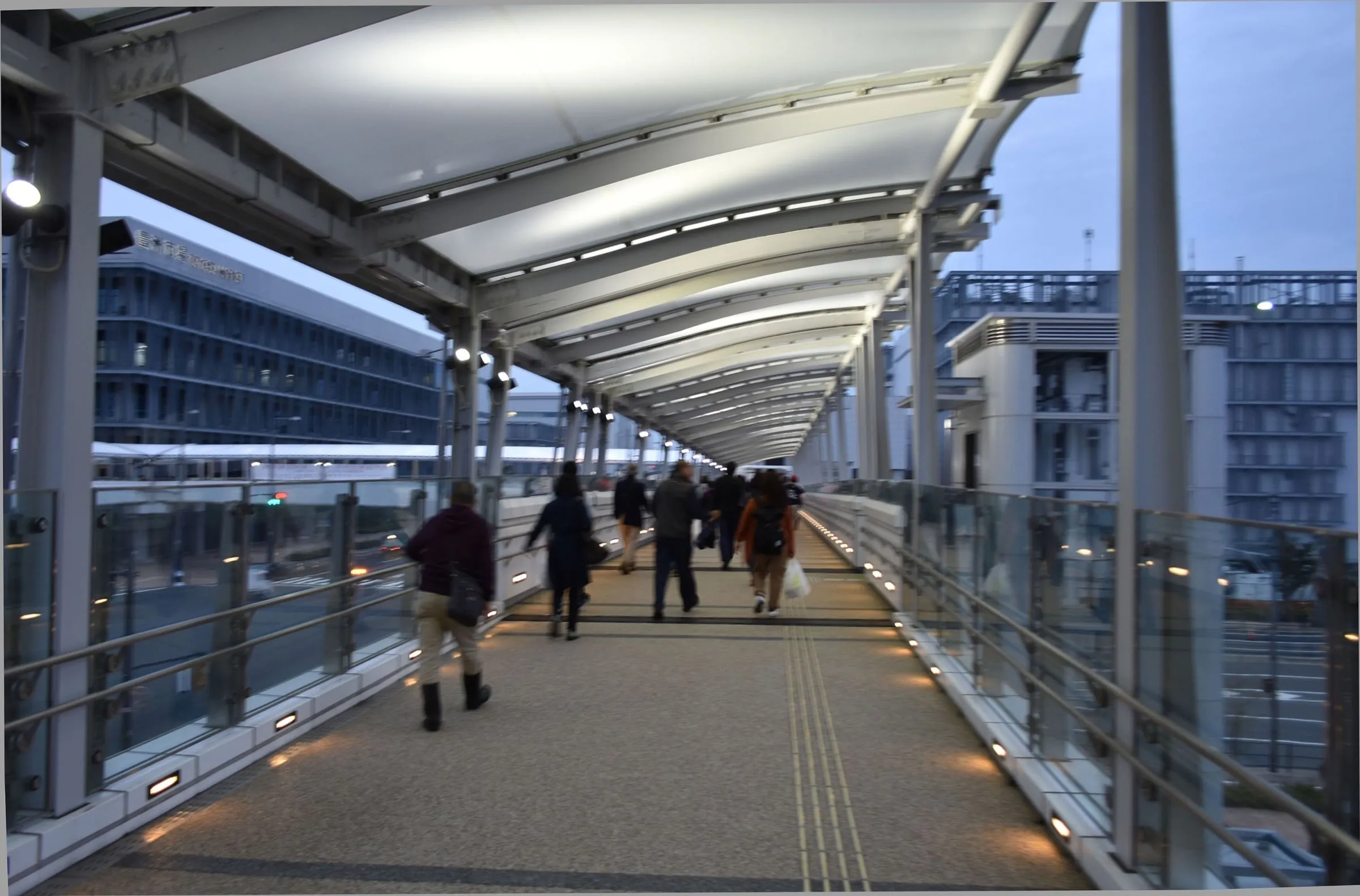
A covered outdoor walkway at Toyosu Market just before 6 a.m. on Oct 15, 2018, four days after the market opened. Photo: 江戸村のとくぞう / Wikimedia Commons (CC BY-SA 4.0). Resized.
Plan the journey before you apply: the meeting time is 5:30 a.m., so check the Yurikamome’s Shijo-mae timetable for a train that gets you there in time.
When is Toyosu Market closed?
Toyosu Market closes on Sundays, most national holidays and most Wednesdays, plus a New Year break. Its 2026 calendar for seafood lists 114 closed days, which include 51 Sundays and 45 of the year’s 52 Wednesdays.
On those days nobody can enter, the market says, and that includes the restaurants and shops. Only the rooftop garden stays open, from 5 a.m. to 11 p.m.
The year’s end bends the pattern. Sunday, Dec 27, and Wednesday, Dec 30, 2026, are market days for seafood, and the market then closes from Dec 31 through Jan 4, 2027.
The 2027 calendar, already posted, lists 115 closed days for seafood. A few holidays stay open: Children’s Day, Wednesday, May 5, 2027, is a market day, as the autumn equinox holiday on Sep 23 was in 2026.
The market publishes separate calendars for seafood and for produce, and they differ on a few days: on Wednesday, Nov 25, 2026, only the produce side closes. For the tuna, the seafood calendar is the one that counts. The calendar page also offers a CSV file for importing the closed days into Google Calendar.
Why did Tokyo’s fish market move from Tsukiji to Toyosu?
The metropolitan government’s own description of Toyosu sets out what it wanted: closed, temperature-controlled buildings that protect food from heat, wind and rain, room for trucks and cargo near the selling floors, and space to process, sort and pack goods. It chose Toyosu for the Tsukiji market in December 2001.
The market’s roots go back further than Tsukiji. The metropolitan government says that Tokugawa Ieyasu, after founding his shogunate in Edo, brought fishermen from Tsukuda village in Osaka to supply fish for the people working in Edo Castle. The fishermen sold the rest of their catch at the foot of the Nihonbashi bridge. That fish quay, the uogashi, is counted as the beginning of Tokyo’s markets.
The Great Kanto Earthquake of September 1923 badly damaged the city’s twenty-odd private markets. In 1935 the Tokyo City Central Wholesale Market opened, with its main market at Tsukiji and branches at Kanda and Koto.
Toyosu opened almost two years later than planned. In July 2015 the city agreed with the market trade on an opening date of Nov 7, 2016, and announced the official name. The four main buildings were finished in May 2016. In August 2016 the metropolitan government announced that the move would be postponed. In September the governor held a press conference on the absence of fill soil under the buildings, according to the market’s official timeline.
An expert panel on soil contamination was set up that same month and published its report in November 2017. In December 2017 the city and the trade agreed on Oct 11, 2018, as the opening date. Extra work on the buildings’ underground pits and groundwater system was finished in July 2018, and that month the governor declared that the market was safe and could be used with confidence. The government still publishes air and groundwater survey results for the site; the latest release is dated Oct 6, 2026.
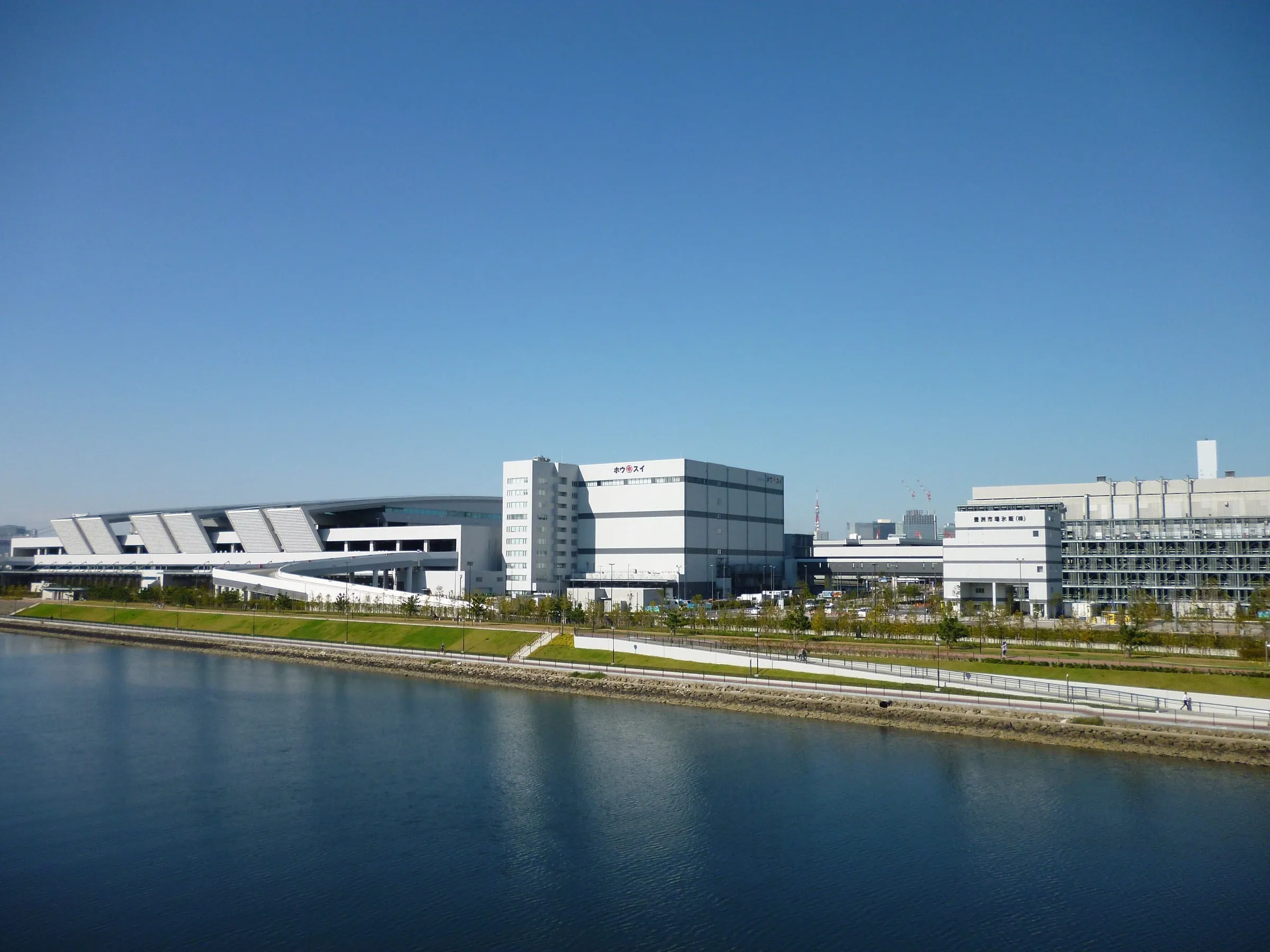
Toyosu Market’s Fisheries Wholesale Market Building, seen across the water from the Ariake-kita Bridge on Nov 3, 2018. Photo: EXECUTOR / Wikimedia Commons (CC0). Resized.
What can you see in Toyosu Market’s three blocks?
Toyosu’s three blocks sit along one pedestrian deck, each with one visitor entrance from it: Block 7 holds the seafood wholesale floors, where the tuna are auctioned; Block 6, the intermediate wholesalers’ stalls, restaurants and shops; and Block 5, fruit and vegetables.
Block 6’s Fisheries Intermediate Wholesale Market Building is the largest building at Toyosu, with about 177,000 square meters of floor space. On its first floor, the intermediate wholesalers, or nakaoroshi, supply neighborhood fishmongers and sushi restaurants. The market notes that they sell to trade buyers taking set quantities, mainly supermarkets, shops and restaurants, so ordinary shoppers cannot buy from them.
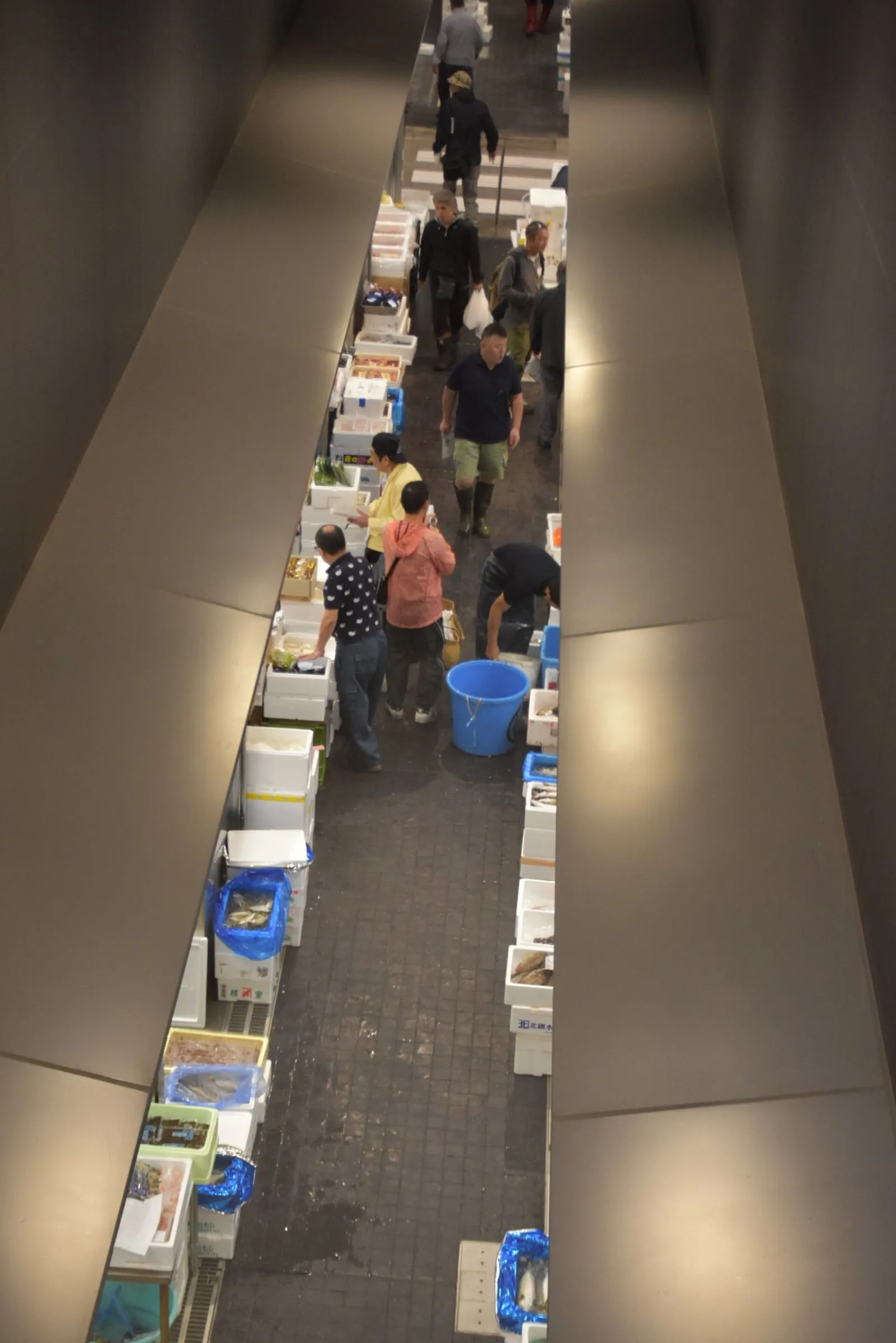
An aisle of the intermediate wholesale floor, seen from the third floor of the Fisheries Intermediate Wholesale Market Building in October 2018. Photo: 江戸村のとくぞう / Wikimedia Commons (CC BY-SA 4.0). Resized.
The restaurants and shops, by contrast, are open to everyone. GO TOKYO counts 38 restaurants inside the market: 22 on the third floor of this building, 13 on the third floor of the Management Facilities Building and three on the first floor of the Fruits and Vegetables Building. The fourth floor of Block 6 holds Uogashi Yokocho, about 70 shops selling ingredients, dried foods, seasonings and kitchen knives. Its name contains uogashi, the word once used for the fish quay at Nihonbashi.
Restaurants and shops set their own hours, and some close before the corridors do at 5 p.m. Eating or drinking in the corridors, benches included, is not allowed.
The market also has a grassy rooftop garden, reached by elevator or from the neighboring Toyosu Gururi Park, according to the market’s visitor leaflet, and GO TOKYO notes its views of Rainbow Bridge and Tokyo Tower. The market says the planting is there to counter the urban heat-island effect, alongside solar panels on the roofs.
Next door is Toyosu Senkyaku Banrai, a separate complex of restaurants, food shops and a hot-spring spa that opened on Feb 1, 2024. It stands on land just outside the market and is linked to Shijo-mae Station by the same pedestrian deck.
If you go
Take the Yurikamome line to Shijo-mae (station U14). It is 13 stations and about 27 minutes from Shimbashi, or two stations and about three minutes from Toyosu Station, where you can change from the Tokyo Metro Yurakucho Line, according to the market’s access sheet. From the ticket gates, the pedestrian deck leads straight into the market.
Toei Bus route 市01 runs from Shimbashi Station to the Shijo-mae Ekimae stop in about 25 to 40 minutes. There is no parking for visitors, not even for bicycles, so the market asks everyone to come by public transport.
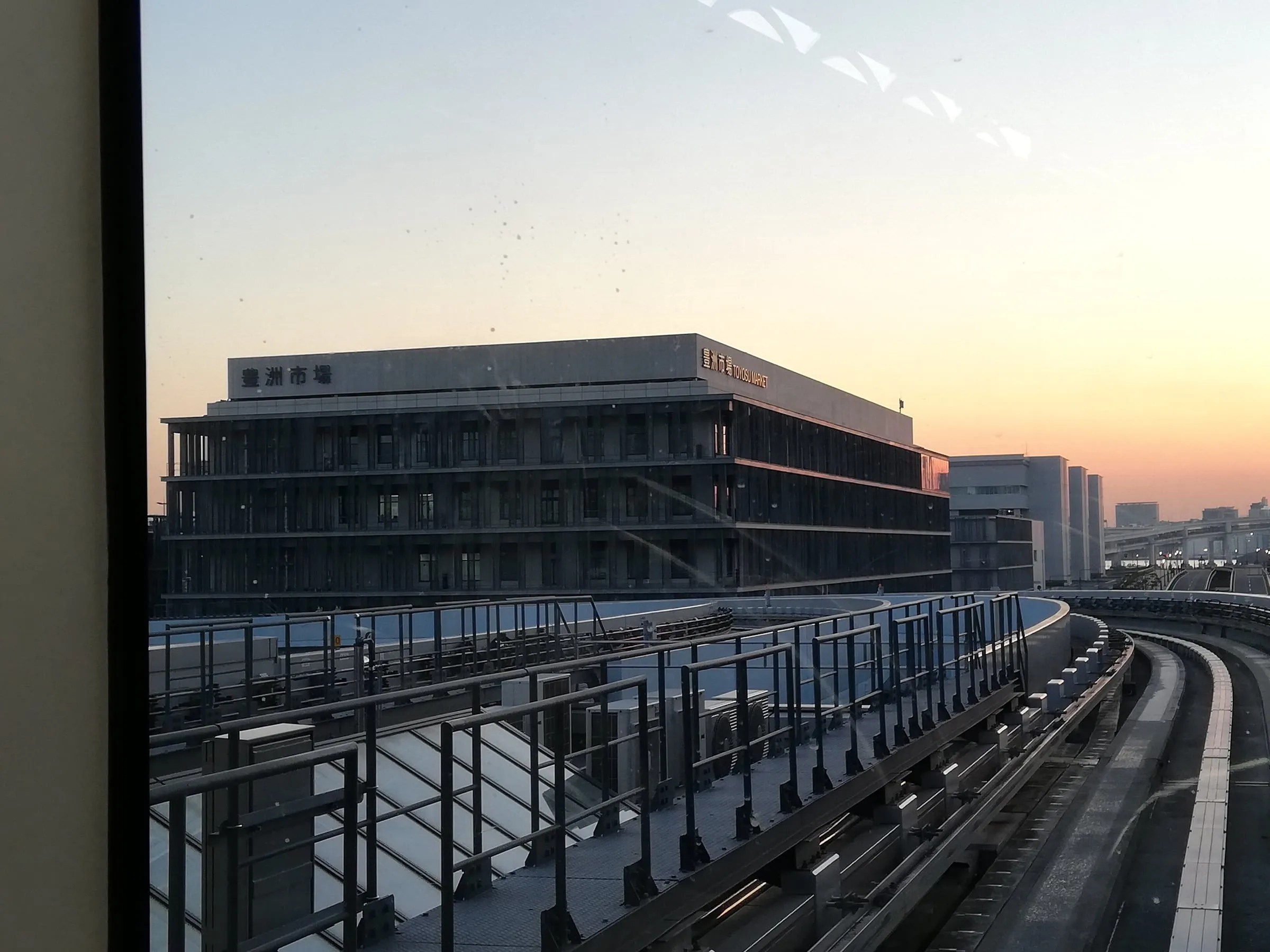
A Toyosu Market building seen from a Yurikamome train at dusk in December 2022. Photo: 先従隗始 / Wikimedia Commons (CC0). Resized.
Start in Block 7 if the tuna are the point. From the deck, the third-floor entrance of the Management Facilities Building leads to the PR Corner, where deck winners meet. The auction walkway is in the Fisheries Wholesale Market Building, in the same block. Then cross to Block 6 for the restaurants, Uogashi Yokocho and the rooftop garden.
For the tuna, come early: the walkway opens at 5 a.m. and the deck session ends at 6:25 a.m. Come before 2:30 p.m. if you want the PR Corner (11:30 a.m. on Saturdays), and remember that the corridors close at 5 p.m.
Follow the guides’ directions, keep food and drink out of the corridors, and leave the buying on the trading floors to the trade.
The Yurikamome runs on toward Shimbashi through the waterfront district of Odaiba, where Daiba and Odaiba-kaihinkoen stations are seven and eight stops from Shijo-mae. Our Odaiba guide picks up from there.
FAQ
Is Toyosu Market the same as Tsukiji Market?
No. Tokyo’s wholesale market moved from Tsukiji to Toyosu in 2018, but the Tsukiji Outer Market, a district of food shops and restaurants, still trades in Tsukiji, as its official site shows. Our Tsukiji Market guide covers it, and the temple Tsukiji Hongwanji stands in the same district.
Can you visit Toyosu Market in the afternoon?
Yes, until 5 p.m. on market days, but the deck session ends at 6:25 a.m., the PR Corner closes at 2:30 p.m. (11:30 a.m. on Saturdays), and some restaurants and shops close before the corridors do.
Do you need a tour to visit Toyosu Market?
No. Entry is free and needs no booking. Only the deck requires winning the lottery, and the market asks participants to enter it themselves rather than through tour companies or event organizers.
More in Travel & Destinations
View all →
Hanayashiki Amusement Park: Rides, Tickets and 1853 Roots
Travel & Destinations · Tokyo
Sunshine City Ikebukuro: Aquarium, Observatory, and Tickets
Travel & Destinations · Tokyo
Imperial Palace Tokyo: Tours, East Gardens and Edo Castle
Travel & Destinations · Tokyo
Kabukiza Theatre: Single-Act Tickets, Captions and History
Travel & Destinations · Tokyo
Related articles
Tsukiji Outer Market: What Stayed When the Fish Market Moved
Travel & Destinations · Tokyo
Akihabara: How Tokyo's Electric Town Began, and When to Go
Travel & Destinations · Tokyo
Ebisu Garden Place: Brewery, Sky Lounge and Winter Lights
Travel & Destinations · Tokyo


Ginza, Tokyo: History, Landmarks, and Car-Free Weekends
Travel & Destinations · Tokyo